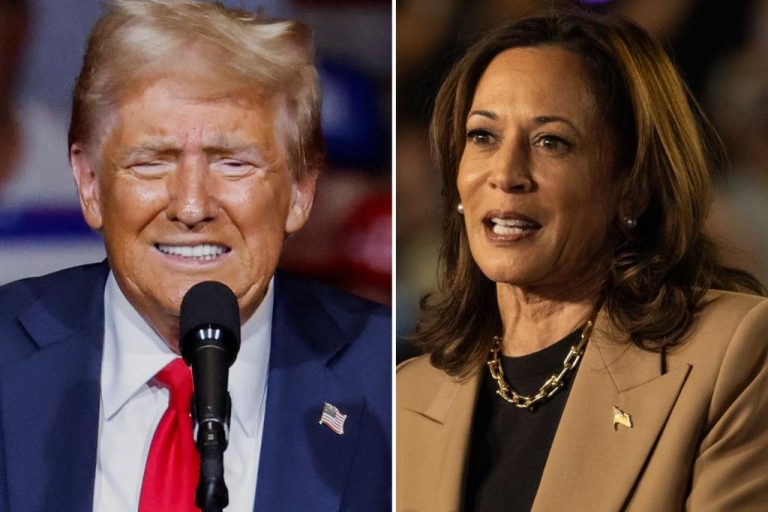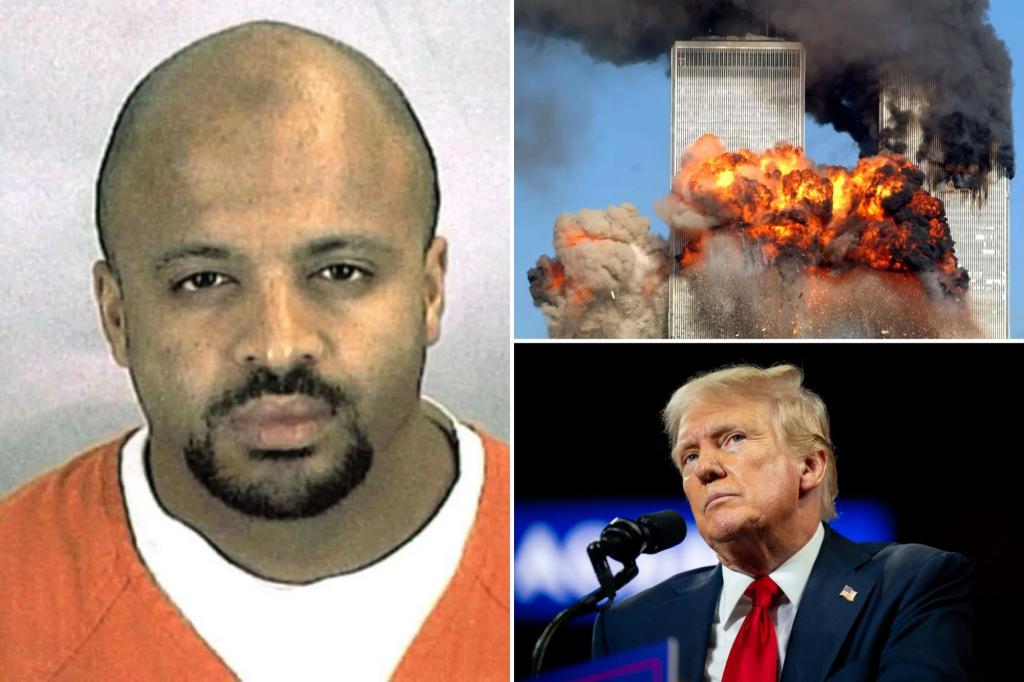
9/11 terrorist asks DOJ not to transfer him, worried about being executed by Trump if he becomes president.
9/11 terrorist urges DOJ against transfer, fears Trump will execute him if elected
An imprisoned mastermind of the 9/11 terrorist attacks is urging the Department of Justice (DOJ) not to transfer him to Saudi Arabia for evaluation, expressing fears that President Donald Trump might execute him if re-elected in the upcoming election.
Khalid Sheikh Mohammed, the self-proclaimed architect of the September 11, 2001, attacks on the World Trade Center and the Pentagon, wrote a letter to a military judge at the U.S. Navy base in Guantanamo Bay, Cuba, on October 12th, stating, “I am not raising my expectations, because I don’t trust this government. I’m looking for justice, and when you don’t trust someone, how do you get justice?”
Mohammed’s concern stems from President Trump’s previous statements about executing terrorists, including his vow to bring back waterboarding as an interrogation technique. The president has also expressed support for keeping Guantanamo Bay open and has criticized his predecessor’s administration for trying to close the detention facility.
In his letter, Mohammed mentioned being held at Guantanamo Bay for the past 18 years without trial and his desire for a fair trial in a federal court, rather than a military commission. He argued that his detention without a fair hearing violated his rights as a prisoner of war under the Geneva Conventions.
The Saudi national has been in U.S. custody since his capture in Pakistan in 2003 and was transferred to Guantanamo Bay in 2006. He is one of six men accused of plotting the 9/11 attacks, which killed nearly 3,000 people in New York City, Washington D.C., and Pennsylvania.
According to Mohammed’s defense team, he has been subject to torture during his time in U.S. custody, including waterboarding, sleep deprivation, and physical abuse. These allegations have raised concerns about the legality of his detention and the admissibility of evidence obtained through such coercive methods.
The DOJ is currently considering Mohammed’s transfer to Saudi Arabia for a mental health evaluation, as part of his legal defense in preparation for his upcoming trial. However, Mohammed is skeptical of the U.S. government’s intentions and fears that he may face unfair treatment or even execution if he is transferred to Saudi custody.
Human rights organizations and legal experts have criticized the prolonged detention of Mohammed and other detainees at Guantanamo Bay without trial, arguing that it violates international law and undermines the principles of justice and due process. They have called for the closure of the detention facility and the prosecution of terrorism suspects in federal courts with full legal protections.
In response to Mohammed’s letter, the DOJ issued a statement saying, “The Department of Justice is committed to ensuring that Khalid Sheikh Mohammed and his co-defendants receive a fair trial consistent with the principles of justice and the rule of law. We are reviewing his request for transfer to Saudi Arabia and will make a determination based on the facts and circumstances of his case.”
President Trump has not commented on Mohammed’s case or his request to be transferred to Saudi Arabia. However, his previous statements on terrorism and national security suggest that he would be unlikely to intervene to stop Mohammed’s transfer or to seek a different outcome for the 9/11 mastermind.
As the DOJ considers Mohammed’s transfer and trial options, the legal and ethical questions surrounding his detention and prosecution continue to generate debate and controversy. The outcome of his case will have far-reaching implications for the U.S. government’s counterterrorism policies and practices, as well as for the rights of detainees held in U.S. custody around the world.
In the midst of ongoing political and legal battles over national security and human rights, the fate of Khalid Sheikh Mohammed and his co-defendants remains uncertain, raising profound questions about justice, accountability, and the rule of law in the fight against terrorism.