Analysts predict Trump and Harris will increase national debt.
Recent projections have revealed the potential impact that former President Donald Trump and Vice President Kamala Harris could have on the national debt if they were to assume leadership positions in the future. Analysts have calculated the numbers and the results are quite staggering.
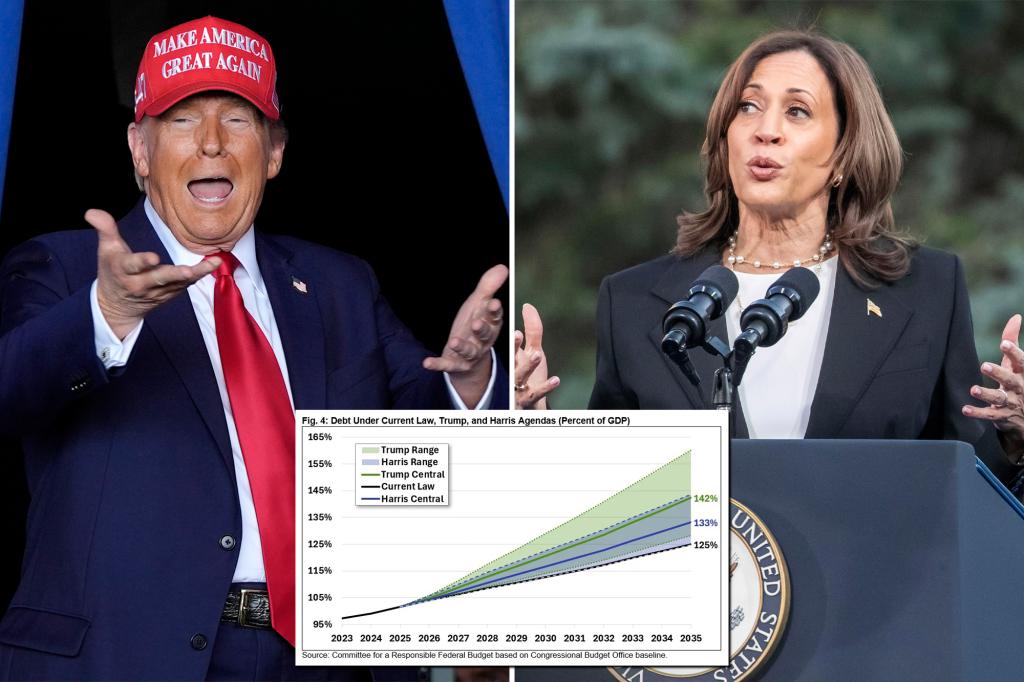
If Trump were to return to the White House, it is estimated that his policies would result in an addition of approximately $8.3 trillion to the national debt over the span of a decade. This projection takes into account factors such as tax cuts, increased military spending, and deregulation measures that Trump is known to favor.
On the other hand, if Harris were to become the President, the projected increase in the national debt would be around $4.3 trillion over the same ten-year period. Analysts attribute this estimate to Harris’ support for policies such as increased healthcare spending and climate initiatives, which would require significant investments.
It is important to note that these projections are based on a variety of assumptions and variables, and the actual impact on the national debt could differ depending on a multitude of factors. However, the numbers serve as an indication of the potential financial consequences of the policies that these two political figures are likely to pursue.
The issue of national debt is a critical one, as it has far-reaching implications for the economy, government spending, and future generations. High levels of debt can constrain the government’s ability to respond to economic challenges, limit the effectiveness of policies, and burden taxpayers with interest payments.
Debt reduction strategies have been a subject of debate among policymakers, with different approaches being proposed to tackle the issue. Some advocate for austerity measures, budget cuts, and increased revenue through taxes, while others argue for investments in growth-oriented policies that can generate revenue in the long term.
Regardless of the specific strategies, addressing the national debt requires a comprehensive and sustainable approach that takes into consideration the complex interplay of economic, social, and political factors. It is a challenge that will require cooperation, compromise, and long-term planning to effectively manage.
As the political landscape continues to evolve and new leaders emerge, the issue of national debt will remain a topic of discussion and concern. The projections regarding Trump and Harris serve as a reminder of the financial implications of political decisions and the importance of responsible governance.
Ultimately, the choices made by leaders in power will have a lasting impact on the country’s financial health and stability. It is essential for policymakers and citizens alike to stay informed, engaged, and proactive in addressing the challenges posed by the national debt.