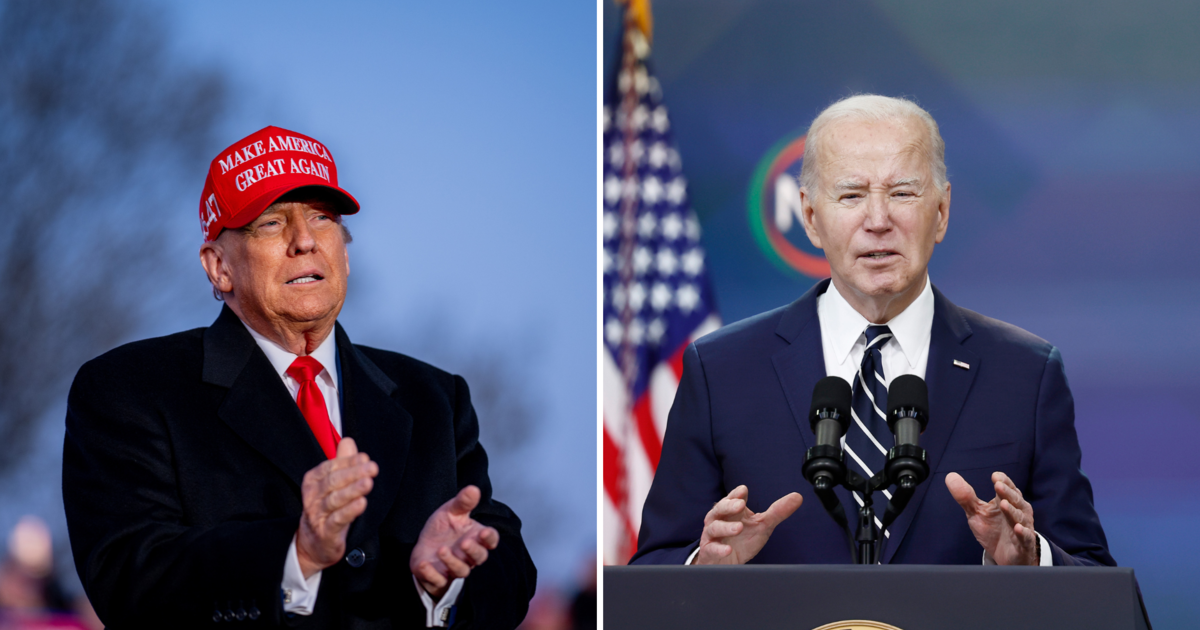
Are Trump and Biden mentally fit to be president?
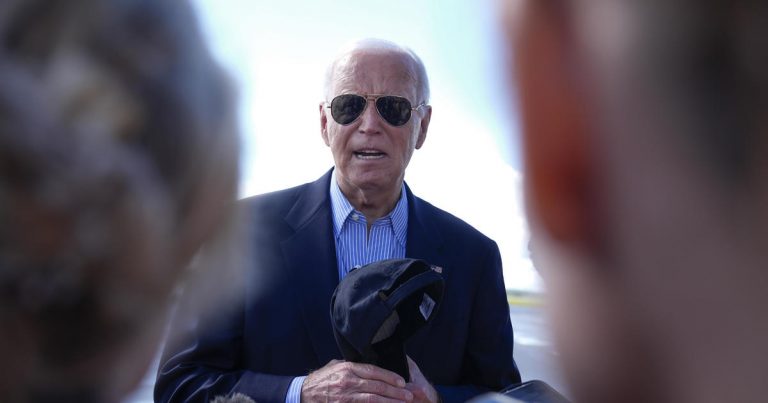
A recent survey conducted by CBS News/YouGov revealed that a significant portion of the nation’s voters have doubts about the mental and cognitive health of both President Biden and former President Donald Trump. Approximately 25% of voters believe that neither candidate possesses the necessary cognitive abilities to effectively serve as president.
Partisanship seems to influence these perceptions, leading to a challenging dilemma for some voters. Many independents are faced with the decision of voting for a candidate – whether Biden or Trump – whom they do not believe is mentally fit for the presidency.
Interestingly, Trump receives slightly better ratings in terms of cognitive ability compared to Biden, with about half of voters expressing confidence in Trump’s mental faculties, while only a third believe the same about Biden.
These opinions have remained relatively stable in recent months, reflecting the entrenched views of the electorate.
While partisan affiliation does play a role in shaping these beliefs, it is worth noting that Democrats are more critical of Biden’s cognitive health than Republicans are of Trump’s. Surprisingly, even Democrats who harbor doubts about Biden’s capacity to serve as president are still choosing to vote for him over Trump.
Conversely, Republicans exhibit even more skepticism towards Biden, contributing to his lower overall ratings in terms of cognitive ability.
Among independents, a larger proportion view Trump as mentally fit to serve as president compared to Biden. This sentiment is closely tied to voting behavior, as most independents who doubt Biden’s cognitive abilities are backing Trump, and vice versa.
These findings shed light on the complex interplay between perceptions of cognitive health and political preferences among the electorate. Despite concerns about the mental acuity of both candidates, voters across party lines are making strategic choices based on their own assessments.
It is clear that the issue of cognitive health has become a prominent factor in how voters evaluate presidential candidates, shaping their decisions at the ballot box. As the country grapples with polarized opinions and competing priorities, the question of mental fitness for office remains a key consideration for many voters.
Ultimately, the upcoming election will test how these perceptions translate into electoral outcomes and what they signify for the future of American politics.