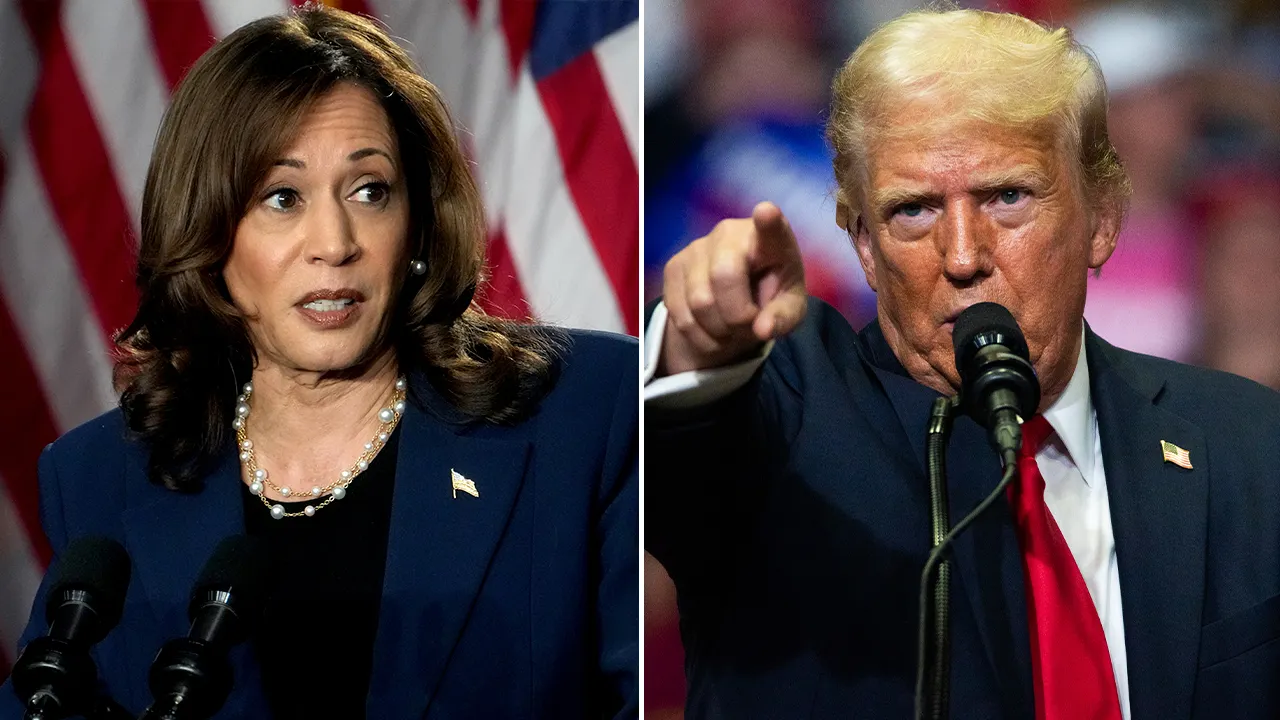
Biden received more support from Black voters despite Harris’ rise in youth polls.
Recent polls indicate a shifting political landscape as Vice President Kamala Harris gains momentum in the wake of President Biden’s decision to not seek re-election. Despite Harris’ improved performance among various demographic groups, including young voters and Hispanics, the numbers also reveal a concerning trend for her campaign: a decreasing level of support from Black voters.
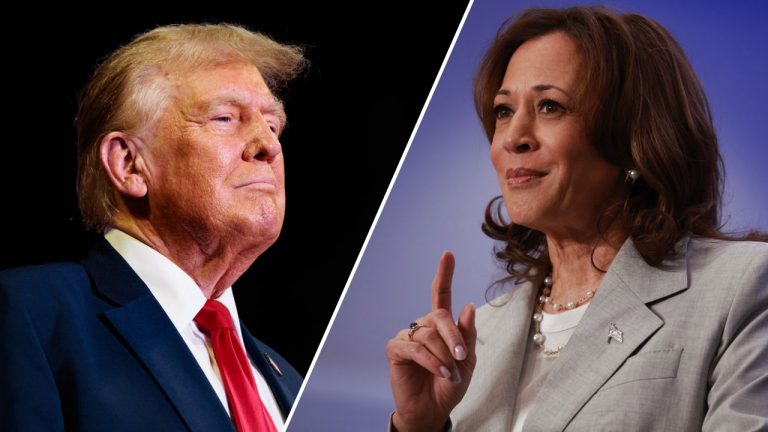
An analysis comparing polls conducted before and after the announcement of Biden’s decision to step aside sheds light on this issue. In a survey conducted on July 2, Biden held a significant lead over former President Trump among Black voters, with 56% support compared to Trump’s 13%. This 43-point gap highlighted Biden’s strong standing within this demographic.
However, when Harris replaced Biden as the Democratic front-runner in a subsequent poll, the dynamics shifted. Harris garnered 65% of support from Black respondents, while Trump secured 17%. While Harris maintained a sizable lead, the margin between her and Trump decreased to 48 points, reflecting a five-point decrease from Biden’s initial advantage.
This trend was further emphasized in a broader comparison of the two polls conducted by Harvard Institute of Politics polling director John Della Volpe. His analysis showed that while Harris experienced a significant swing in her favor among young voters, Hispanics, and independent voters, she saw a drop in support among Black voters.
The impact of this decline in Black voter support is significant, given the historical importance of Black voters in Democratic politics. Democrats have long relied on strong support from minority communities, particularly Black Americans, to secure electoral victories.
One possible explanation for this shift could be the messaging and outreach efforts of both candidates. Harris has focused on issues of racial justice, equity, and inclusion, aiming to appeal to diverse constituencies. Meanwhile, Trump has made efforts to engage with the Black community, emphasizing his administration’s initiatives such as creating “opportunity zones” in minority neighborhoods.
Trump’s upcoming visits to cities with significant Black populations, such as Chicago and Harrisburg, underscore his commitment to outreach efforts aimed at connecting with Black voters. These engagements provide him with a platform to address issues that matter to the Black community and showcase his willingness to engage in direct dialogue.
Despite these efforts, challenges remain for both candidates in attracting and retaining support from Black voters. Harris must address concerns and criticisms that have surfaced within the community, while Trump faces skepticism and resistance stemming from his past statements and actions.
As the 2024 election season unfolds, the dynamics of Black voter support will continue to be a critical factor in shaping the presidential race. Both candidates will need to navigate this complex landscape with sensitivity, understanding, and a genuine commitment to addressing the needs and priorities of Black Americans.