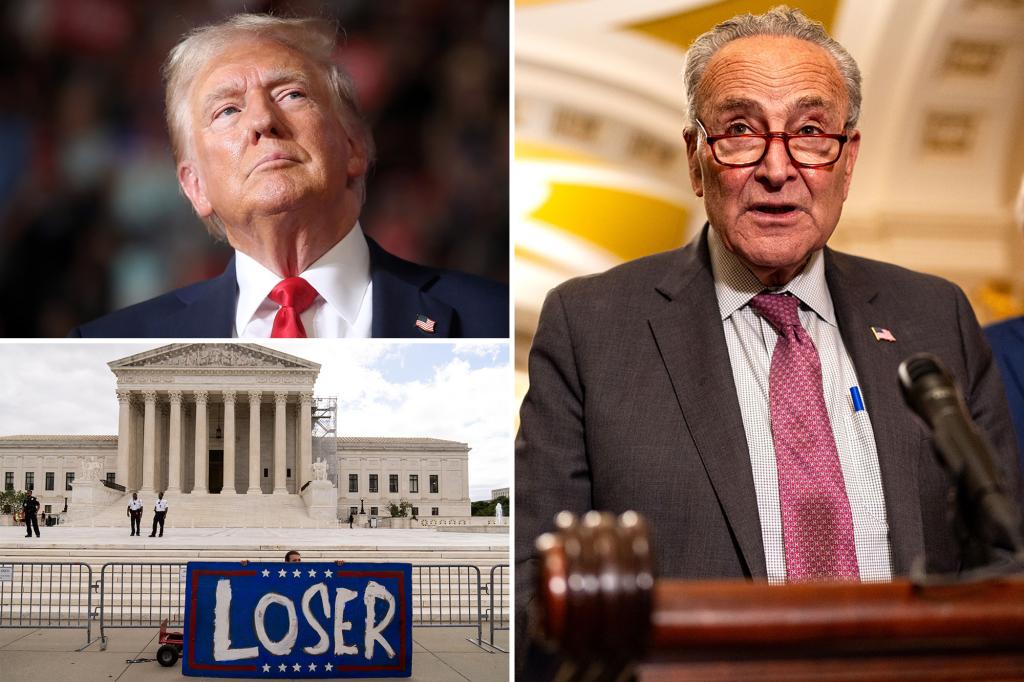
Chuck Schumer introduces a bill to reverse Supreme Court ruling protecting Trump from legal action.
Senate Majority Leader Chuck Schumer recently unveiled a bill aimed at reversing the Supreme Court’s ruling granting former President Donald Trump immunity while in office. The move comes amidst a heated debate surrounding presidential immunity and accountability.
The bill, titled the “Presidential Accountability and National Security Act,” seeks to hold former presidents accountable for any wrongdoing while in office, including instances of abuse of power or corruption. This legislation could have far-reaching implications for the future of presidential immunity and the balance of power between the executive and judicial branches.
Schumer’s decision to introduce this bill reflects growing concerns among lawmakers and the public about the limits of presidential power and the need for transparency and accountability. The Supreme Court’s ruling in Trump v. Vance has raised questions about whether a sitting president can be investigated or indicted for criminal offenses, leading to calls for reform.
Under the proposed legislation, former presidents would no longer have blanket immunity from criminal investigations or prosecutions stemming from their time in office. This would represent a significant shift in the legal landscape surrounding presidential immunity and could have major implications for future administrations.
Opponents of the bill argue that it could undermine the independence of the executive branch and expose former presidents to politically motivated investigations. They maintain that presidential immunity is essential to protect the office of the president and ensure that the executive branch can function effectively without fear of legal reprisals.
However, supporters of the bill argue that accountability and transparency are essential to upholding the rule of law and preventing abuses of power. They contend that no one, not even the president, should be above the law and that holding former presidents accountable is critical to maintaining a healthy democracy.
The debate over presidential immunity is not a new one, but the Supreme Court’s recent ruling has reignited interest in the topic and sparked a renewed push for legislative action. With the introduction of Schumer’s bill, the issue is once again in the spotlight and is likely to generate significant debate in the coming weeks.
As lawmakers consider the implications of this legislation and debate its merits, one thing is clear: the question of presidential immunity is far from settled, and the balance between executive power and accountability remains a contentious and complex issue.
Whether Schumer’s bill will ultimately succeed in axing the Supreme Court’s ruling on Trump’s immunity remains to be seen. However, one thing is certain: the debate over presidential immunity is far from over, and the outcome of this legislative battle could have far-reaching consequences for the future of American democracy.