CNN reports that the Justice Department warned Elon Musk that his $1 million giveaway to swing state voters could be against the law.
Elon Musk, the renowned Tesla and SpaceX founder, is making headlines with his latest initiative to encourage swing state voters to participate in the upcoming elections. Musk announced his plan to award $1 million each day to a random registered Pennsylvania voter who signs the petition for his political action committee (PAC). However, this unique approach has sparked legal concerns, with the Justice Department cautioning Musk that his giveaway could potentially violate federal laws prohibiting payment for voter registration.
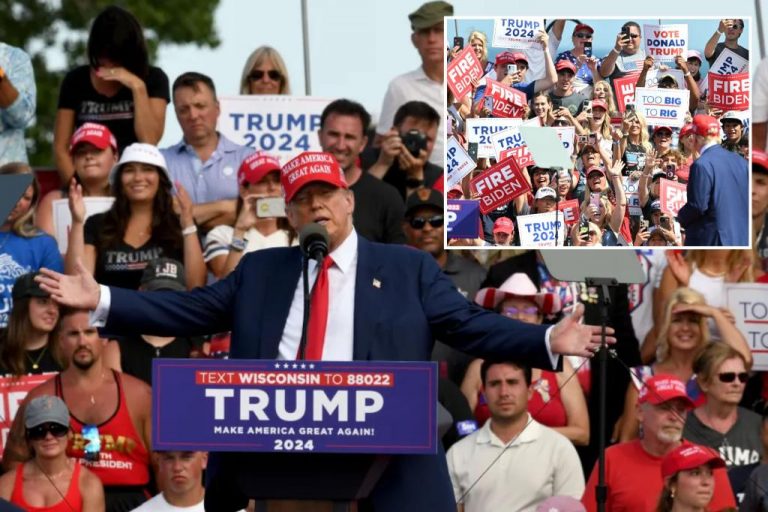
Speaking at an America PAC event in Harrisburg, Pa., Musk emphasized that the $1 million prize would be given out daily until the election on Nov. 5. The America PAC, founded by Musk, aims to support the reelection of former President Donald Trump.
As the wealthiest person globally, with an estimated net worth of $242 billion, Musk has already allocated significant funds, with over $75 million spent on Trump’s reelection efforts. In a previous campaign, Musk offered supporters $47 for each registered voter they recruited in key battleground states as part of his petition initiative.
Despite the buzz surrounding Musk’s $1 million giveaway, President Trump, also campaigning in Pennsylvania, remained oblivious to the details when questioned about it, as reported by the Associated Press.
While Musk and his PAC have refrained from public comments on the controversy, advocates of the initiative argue that since the reward is for a petition signature and not for voter registration directly, it does not breach the law. However, legal experts suggest that Musk’s approach is pushing the boundaries of election regulations.
So, what exactly is a PAC? The Federal Election Commission defines PACs as tax-exempt committees that can receive unlimited financial contributions to support political activities, including campaigns. Super-PACs, on the other hand, have the added advantage of receiving donations from corporations and entities typically restricted from direct candidate donations.
America PAC, the organization spearheaded by Musk, falls under the super-PAC category, allowing it to receive donations from other PACs.
Elon Musk’s PAC endeavor aims to garner support through a petition endorsing the First and Second Amendments to the U.S. Constitution, safeguarding freedom of speech and the right to keep and bear arms, respectively. The America PAC website highlights additional values such as secure borders, sensible spending, safe cities, and a fair justice system, linking back to various posts supporting these causes.
During an October town hall meeting, Musk expressed the challenge of raising awareness about the petition amidst the absence of traditional media coverage. In an effort to boost visibility, Musk implemented the $1 million daily prize strategy, emphasizing the significance of the petition in supporting the Constitution.
As of October 21, two individuals from Pennsylvania have already claimed the $1 million prize, according to the petition site. The America PAC submitted its initial financial report in early October, with the second report anticipated by October 24, as reported by The Hill.
While Musk has remained silent on the debate surrounding the legality of his PAC’s incentivized campaign, concern has been raised by Pennsylvania Governor Josh Shapiro, labeling Musk’s efforts as troubling, subject to law enforcement scrutiny. Despite assertions from sources familiar with the PAC that they are law-compliant, doubts persist among legal experts.
Initially, Musk’s $47-per-referral offer was considered legal, as it did not entail paying for voter registration directly. However, the current iteration requiring winners to be registered voters appears to raise legal concerns, coming close to breaching federal laws. Legal scholars have pointed out potential violations and emphasized the restrictions set forth in federal statutes against any form of monetary incentives influencing voter behavior.
Although Musk’s initiative does not involve direct payment for voting, the requirement for participants to be registered voters within specific states, particularly close to Election Day, suggests a financial incentive to encourage voter registration. The debate on the legality of such practices has intensified, prompting a revision in the giveaway announcement by America PAC.
Recent changes in election laws have relaxed restrictions on coordination between campaigns and super-PACs, once deemed illegal. The Federal Election Commission’s decision to eliminate anti-corruption laws prohibiting coordination between super PACs and political candidates paved the way for increased cooperation.
In conclusion, Elon Musk’s $1 million giveaway campaign to incentivize registered voters through his PAC has stirred legal debates and scrutiny, raising questions about the boundaries of electoral regulations. While the controversy continues to unfold, Musk’s innovative approach has undoubtedly sparked discussions on the intersection of political activism, financial incentives, and legal compliance in the electoral process.