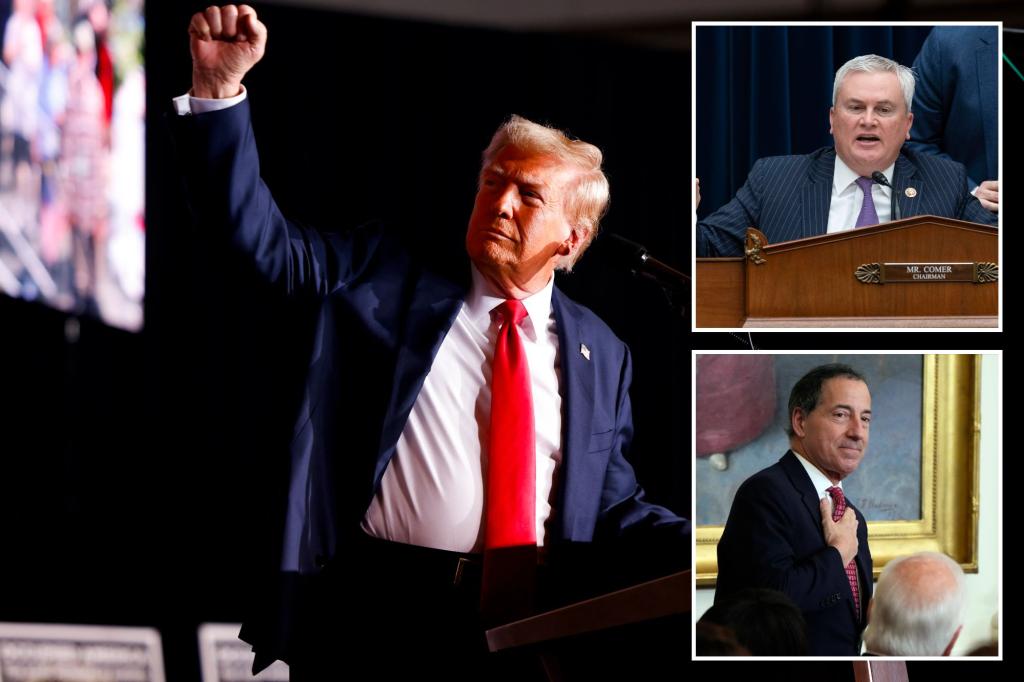
Comer criticizes Raskin for not promising to certify Trump’s win.
In a recent turn of events on Capitol Hill, tensions flared between two prominent political figures as Rep. Jaime Herrera Beutler (R-Wash.) accused Rep. Jamie Raskin (D-Md.) of being the “ultimate hypocrite.” The clash began when Raskin refused to confirm that he would uphold the certification of a potential Trump victory in the upcoming election.
As the political landscape becomes increasingly contentious, with the election looming on the horizon, these interactions between lawmakers shed light on the deep divides that exist within Congress. But what led to this particular moment of confrontation between Beutler and Raskin?
The showdown unfolded during a heated debate over the legitimacy of the election results and the responsibility of elected officials to uphold the democratic process. Beutler, a staunch supporter of President Trump, challenged Raskin’s commitment to honoring the will of the voters, accusing him of playing both sides of the political aisle.
Raskin, a vocal critic of the Trump administration, stood his ground, refusing to make any guarantees about his future actions regarding the certification process. This refusal sparked outrage among his Republican colleagues, who accused him of undermining the democratic principles that uphold the nation’s electoral system.
Despite the escalating tensions, both Beutler and Raskin remained steadfast in their positions, each accusing the other of hypocrisy and political opportunism. The clash highlighted the deep-seated mistrust and animosity that pervades the current political climate in Washington.
As the nation braces itself for the upcoming election, the interactions between Beutler and Raskin serve as a stark reminder of the challenges facing the country. With bipartisan cooperation seemingly out of reach, the divide between Republicans and Democrats continues to widen, leaving little room for compromise or consensus.
For Beutler, Raskin’s refusal to commit to certifying a Trump victory was the final straw in a series of perceived betrayals by her Democratic colleagues. She viewed his actions as emblematic of the entrenched bias and prejudice that she believes plagues the Democratic Party.
On the other hand, Raskin saw Beutler’s accusations as a desperate attempt to deflect attention from the Republican Party’s own shortcomings and failures. He argued that her attacks were motivated by partisan politics rather than a genuine concern for the integrity of the electoral process.
As the confrontation between Beutler and Raskin unfolded, it became clear that the underlying issues at play extended far beyond their personal animosity. The clash exposed the deep-seated divisions that exist within Congress and the broader political landscape, fueling speculation about the future of American democracy.
With the election drawing nearer, the specter of uncertainty looms large over the nation, casting a shadow of doubt over the integrity of the electoral process. As Beutler and Raskin’s feud continues to escalate, the stakes have never been higher, and the need for bipartisan cooperation has never been more urgent.
As the dust settles on this latest clash between lawmakers, one thing remains clear: the future of American democracy hangs in the balance, with the actions of individuals like Beutler and Raskin shaping the course of history. Will they rise above their differences and find common ground, or will their animosity further divide an already fractured nation?