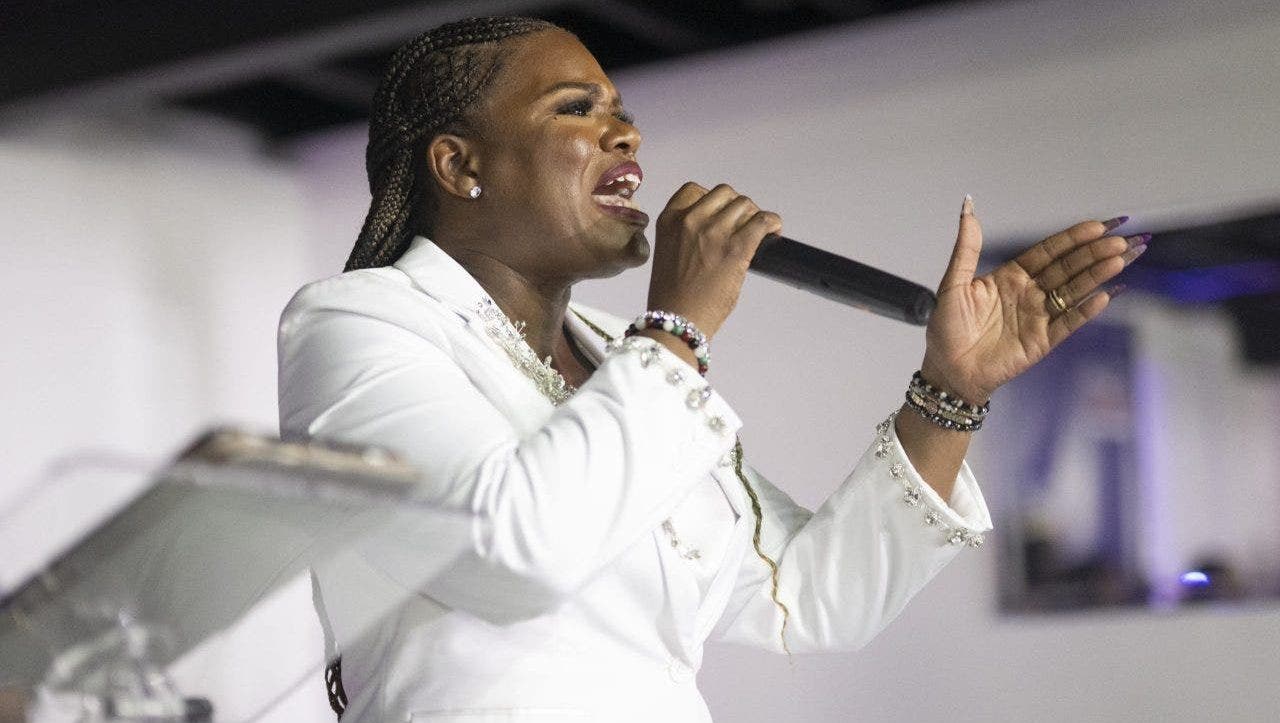
Cori Bush warns pro-Israel group in passionate concession speech.
Democratic Rep. Cori Bush of Missouri recently delivered a passionate concession speech that shook the political landscape. In her powerful address, she directed a fierce warning to the American Israel Public Affairs Committee (AIPAC), the nation’s largest pro-Israel group, stating, “be afraid.”
Bush’s defeat in the primary election to a pro-Israel Democratic contender supported by AIPAC was a significant blow. This loss led Bush to assert that the group’s influence had “radicalized” her, raising serious concerns about the impact of external financial backing on elections.
During her speech, Bush did not hold back, calling out AIPAC directly, declaring, “All they did is radicalize me, so they need to be afraid.” With unwavering determination, she vowed, “AIPAC, I’m coming to tear your kingdom down. And let me put all of these corporations on notice, I’m coming after you, too!”
As a controversial figure who gained prominence through her involvement in the Black Lives Matter movement, Bush’s defeat marked the end of her bid for a third term. The Democratic voters’ choice to nominate St. Louis County prosecutor Wesley Bell as her successor showcases the power of political backing and financial support in shaping election outcomes.
Pro-Israel organizations invested significant resources into unseating Bush, a vocal critic of the war in Gaza and the policies of the Jewish state. Their concerted efforts, including spending millions on Bell’s campaign, ultimately led to Bush’s exit from the legislative arena.
Bush expressed in her concession speech that her departure from the legislature would release her from the constraints that held her back from confronting AIPAC head-on. She emphasized, “Because now, there are some strings that I have attached. And as much as I love my job, all they did was radicalize me, and now they should be afraid.”
The financial support provided to Bell’s campaign by pro-Israel super PACs, particularly the United Democracy Project, significantly influenced the election outcome. With a staggering $8.5 million spent to defeat Bush, this backing proved instrumental in securing Bell’s victory in the primary.
AIPAC’s strategic targeting of Bush, following her vocal criticisms of Israel’s response to the Hamas attack in October, highlighted the organization’s formidable influence in shaping electoral dynamics. This deliberate focus on backing candidates aligned with pro-Israel interests mirrors a similar successful strategy employed in the defeat of Rep. Jamaal Bowman, a member of the “Squad,” earlier this year in New York.
In June, the United Democracy Project invested a substantial $15 million in the campaign against Bowman, ultimately leading to his loss to George Latimer, a pro-Israel centrist candidate. This pattern of intervention demonstrates the significant impact of external funding and support on election outcomes.
Rep. Cori Bush’s bold stand against the influence of AIPAC in her concession speech serves as a rallying cry for politicians and voters alike to scrutinize the role of powerful interest groups in shaping electoral processes. Her fearless call to action highlights the need for transparency, accountability, and grassroots support in preserving the integrity of democratic principles.
As the political landscape continues to evolve, the resonance of Bush’s message reverberates beyond her individual defeat, sparking crucial conversations about the influence of money and special interests in determining the course of democratic elections. In the face of formidable opponents and well-funded campaigns, Bush’s unwavering spirit serves as a beacon of hope for those advocating for equitable and transparent political practices.