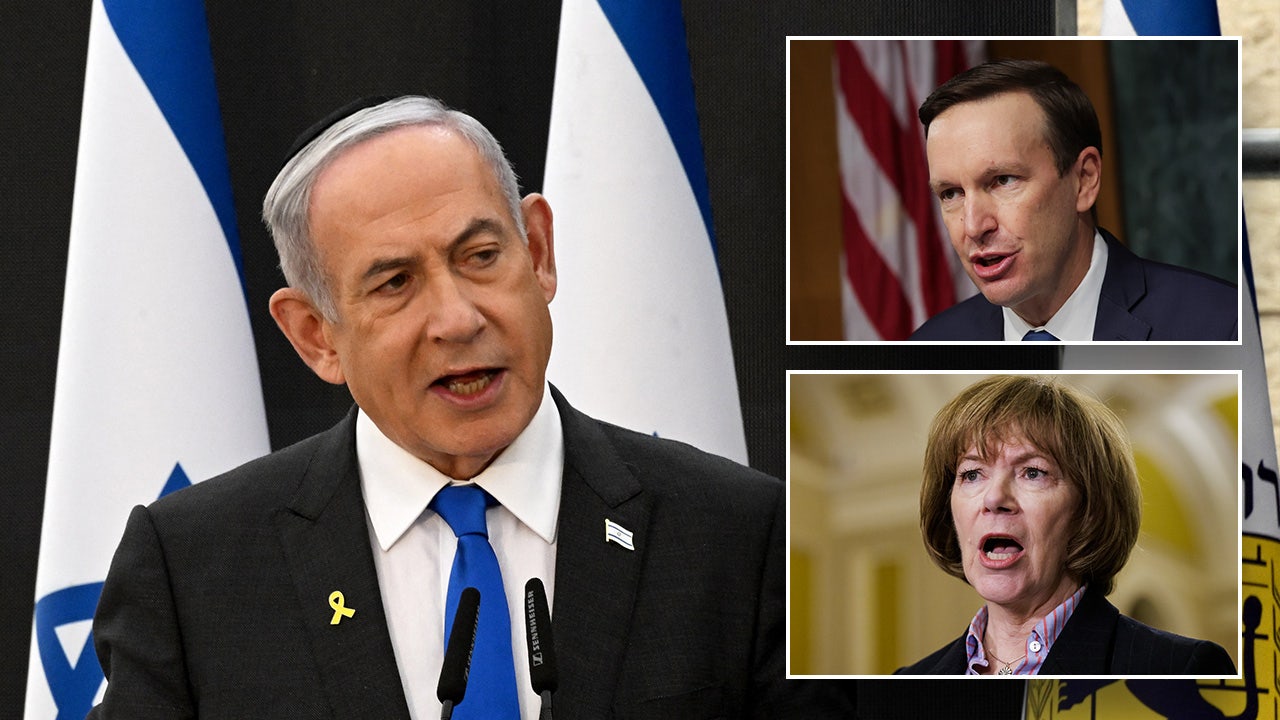
Democrats are unsure about going to Netanyahu’s speech as some in party disagree on Israel.
Senate Democrats are currently facing a dilemma over whether or not to attend Israeli Prime Minister Benjamin Netanyahu’s upcoming remarks to a joint session of Congress. The decision appears to be a contentious issue among party members, with some expressing hesitation while others have already confirmed their attendance.
Netanyahu was invited by bipartisan congressional leaders to speak to lawmakers amidst Israel’s ongoing conflict with the terrorist group Hamas in Gaza. The invitation emphasized the importance of highlighting America’s solidarity with Israel and the Israeli government’s vision for defending democracy, combating terror, and achieving lasting peace in the region.
Senate Majority Leader Chuck Schumer, who has been critical of Netanyahu in the past, signed onto the invitation, citing the enduring relationship between the US and Israel as a primary factor in his decision.
However, some Senate Democrats have yet to make up their minds about attending the address scheduled for July 24. Senators Tom Carper, Brian Schatz, and Angus King all expressed uncertainty about their potential participation.
Progressive voices within the Democratic caucus, such as Senators Bernie Sanders and Elizabeth Warren, have already declared that they will not be attending Netanyahu’s address. Sanders, in particular, has been a vocal critic of Israel’s actions in Gaza, calling the invitation a “very sad day for our country.”
Despite the uncertainty among some Democrats, Senators Kirsten Gillibrand, Jacky Rosen, Jon Tester, Tammy Baldwin, Bob Casey, and Sherrod Brown have all confirmed their attendance at Netanyahu’s remarks next month. Rosen, in particular, as the third Jewish woman to serve as a senator in US history, holds a unique position on the issue and is also co-chair of the Bipartisan Task Force For Combating Antisemitism.
As the Senate Democrats grapple with this decision, the divide within the party reflects wider debates about US foreign policy in the Middle East and the complexities of the US-Israel relationship.
Overall, the question of attending Netanyahu’s address to Congress underscores the challenges and nuances of navigating international diplomacy and balancing diverse perspectives within the Senate.