Dennis Quaid voted for Trump due to justice system concerns.
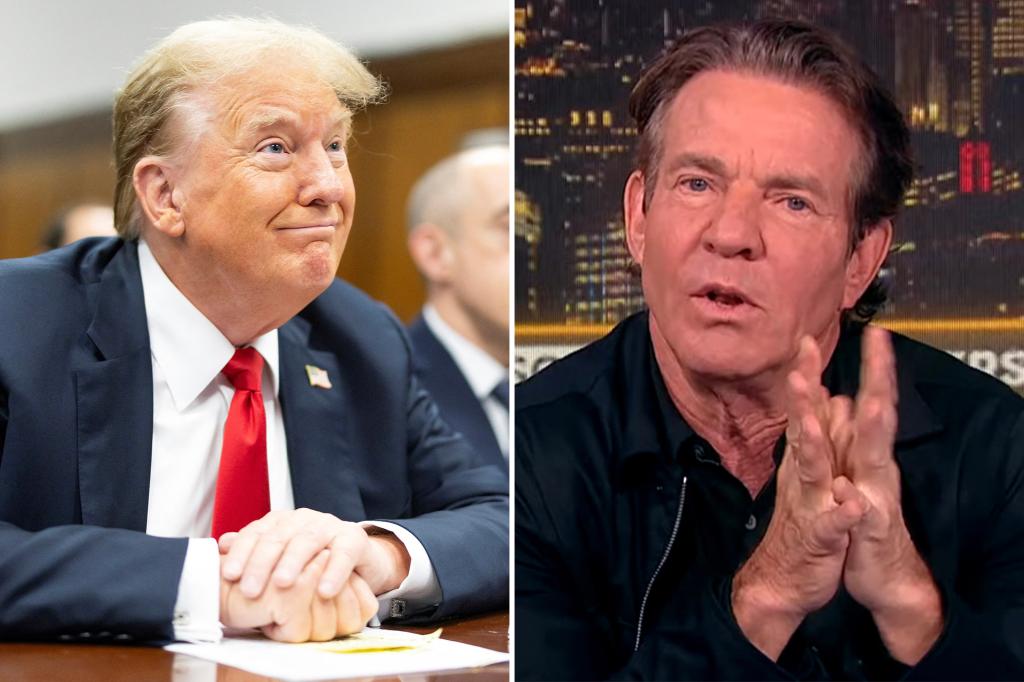
Dennis Quaid, a well-known actor in Hollywood, recently made headlines for his controversial statement about his political views. In an interview, Quaid admitted that the “weaponization of the justice system” was the driving force behind his decision to vote for former President Donald Trump, whom he described as an “a–hole”. This candid revelation sparked a heated debate and garnered mixed reactions from the public.
Quaid’s statement sheds light on the intricate relationship between celebrities and politics. It’s not uncommon for actors, musicians, and other public figures to voice their political beliefs, but Quaid’s bold declaration has ignited a firestorm of criticism and support.
While some applaud Quaid for his honesty and willingness to speak out, others have condemned him for supporting a controversial figure like Trump. The actor’s words serve as a reminder of the polarizing nature of American politics and the diversity of opinions that exist within society.
Quaid’s decision to vote for Trump based on his dissatisfaction with the justice system highlights the importance of informed voting. It underscores the need for individuals to critically examine political candidates and their policies before casting their ballots. Quaid’s perspective offers a unique insight into the considerations that influenced his voting choice.
As a public figure, Quaid’s comments carry significant weight and influence. His words have the power to sway public opinion and shape the political discourse. Whether one agrees or disagrees with his views, Quaid’s willingness to express his convictions openly is a testament to the importance of freedom of speech in a democratic society.
Quaid’s statement has sparked a broader conversation about the role of celebrities in politics. While some argue that celebrities should use their platform to advocate for social and political change, others believe that they should stay out of political matters altogether. Quaid’s stance blurs the line between personal beliefs and public influence, raising questions about the responsibilities of public figures in shaping public opinion.
Regardless of one’s political affiliation, Quaid’s revelation serves as a reminder of the complex and nuanced nature of political discourse. It encourages individuals to engage in meaningful conversations about the issues that matter most to them and to be open to differing viewpoints.
Ultimately, Quaid’s decision to vote for Trump is a reflection of his personal beliefs and values. While his statement may have sparked controversy, it also highlights the importance of respecting diverse perspectives and engaging in civil discourse.
As the public digests Quaid’s revelation and the ensuing debate unfolds, it serves as a poignant reminder of the power of words and the impact of celebrity influence in shaping public discourse. Regardless of where one stands on the political spectrum, Quaid’s statement invites us to reflect on our own beliefs and values and to engage in productive dialogue with those who may hold differing opinions.