Donald Trump in court to fight $5M lawsuit
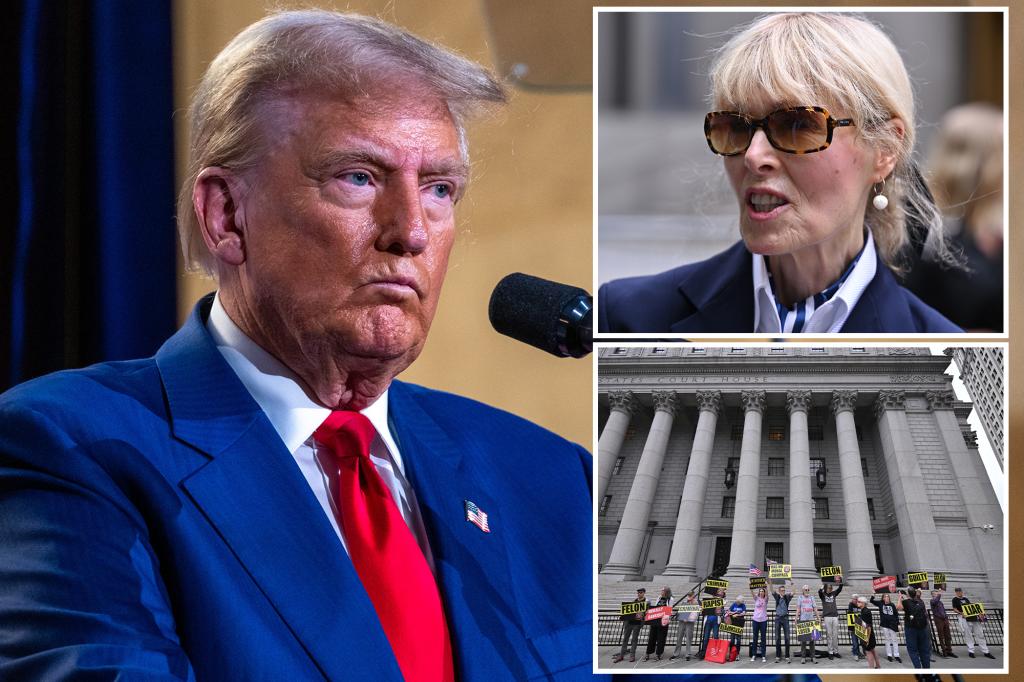
Donald Trump’s legal battles continue as his lawyers head to Manhattan federal court in an attempt to overturn a $5 million judgment in a case brought by E. Jean Carroll.
Carroll, a former magazine columnist, accused Trump of sexually assaulting her in a dressing room at a Manhattan department store in the mid-1990s. Trump denied the allegations and called Carroll a liar, stating that she was trying to boost book sales. However, the court ruled against him in 2021, ordering him to pay $5 million in damages.
Now, Trump’s legal team is pushing back, arguing that the former president should be shielded from Carroll’s defamation lawsuit because he was acting in his official capacity when he made the statements. They are also seeking to take the case to the Supreme Court, claiming that the appeals court erred in its decision.
The outcome of this case could have significant implications for future legal battles involving sitting or former presidents. It raises questions about whether a president can be held personally liable for defamatory statements made while in office and the extent to which they are protected by immunity.
Legal experts are closely watching this case, as it could set an important precedent. It has drawn attention not only because of the high-profile individuals involved but also due to the broader legal issues at stake.
Carroll’s lawyer, Roberta Kaplan, argued that Trump’s comments were personal attacks and not part of his official duties, pointing to the fact that he made the statements at a time when he was a private citizen, not a government official.
Trump’s legal team, on the other hand, contends that the former president was speaking in response to Carroll’s allegations, which were related to his fitness for office. They argue that Trump’s statements were made in his official capacity and should therefore be shielded from legal action.
The case has sparked debate over the scope of presidential immunity and the extent to which a president’s personal actions are protected. It also raises questions about the balance between free speech rights and the right to seek redress for alleged defamation.
The outcome of this case could have wide-ranging implications for future legal battles involving public figures. It could clarify the boundaries of presidential immunity and set a precedent for how defamation cases involving high-profile individuals are handled.
As the legal proceedings unfold, the public will be watching closely to see how the courts grapple with these complex issues. The case serves as a reminder of the enduring impact of words and the challenges of balancing free speech rights with the right to seek legal recourse for alleged harm.
Regardless of the outcome, the Carroll v. Trump case is sure to leave a lasting mark on the legal landscape and spark important discussions about the rights and responsibilities of public figures.