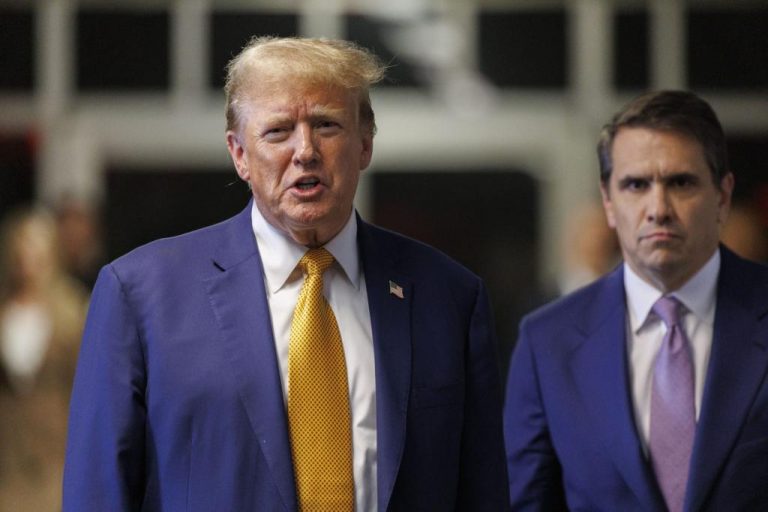
Donald Trump wants to get rid of Social Security tax.
Donald Trump, the former President of the United States, recently called for the elimination of the tax on Social Security. This controversial proposal has sparked debate among politicians and economists alike, with supporters praising it as a way to provide relief to American workers and critics warning that it could lead to funding shortages for the social security program.
Trump made the announcement during a speech at a rally in New Hampshire, where he outlined his plans to boost the economy and create jobs. The elimination of the Social Security tax was a key component of his economic platform, which also included cutting regulations and increasing tariffs on foreign goods.
The Social Security tax, also known as the FICA tax, is a payroll tax that funds the Social Security program. Currently, workers and employers each contribute 6.2% of an employee’s wages, up to a certain limit, to fund the program. Self-employed individuals must pay the full 12.4% themselves.
Proponents of eliminating the Social Security tax argue that it would put more money in workers’ pockets, boosting consumer spending and stimulating the economy. They also claim that the tax is regressive, as it disproportionately affects low and middle-income earners.
However, critics of the proposal warn that eliminating the Social Security tax could lead to funding shortages for the program, putting the benefits of millions of Americans at risk. They argue that the tax is a critical source of revenue for Social Security and that any changes to it must be carefully considered to avoid detrimental impacts on the program.
Trump’s call to eliminate the Social Security tax comes at a time of heightened political tension in the United States, with the upcoming midterm elections and the ongoing debate over the future of the economy. The proposal is likely to be a major point of contention among lawmakers, with Democrats and Republicans expected to clash over its potential impacts.
As the debate over the elimination of the Social Security tax continues to unfold, it is essential for American voters to stay informed and engaged with the issue. The future of the social security program and its benefits for millions of Americans are at stake, making it a critical topic for discussion and debate.
Ultimately, the decision on whether to eliminate the Social Security tax will have far-reaching implications for the American economy and the welfare of its citizens. It is up to policymakers and voters to carefully consider the pros and cons of such a proposal and make informed decisions that will shape the future of Social Security for generations to come.