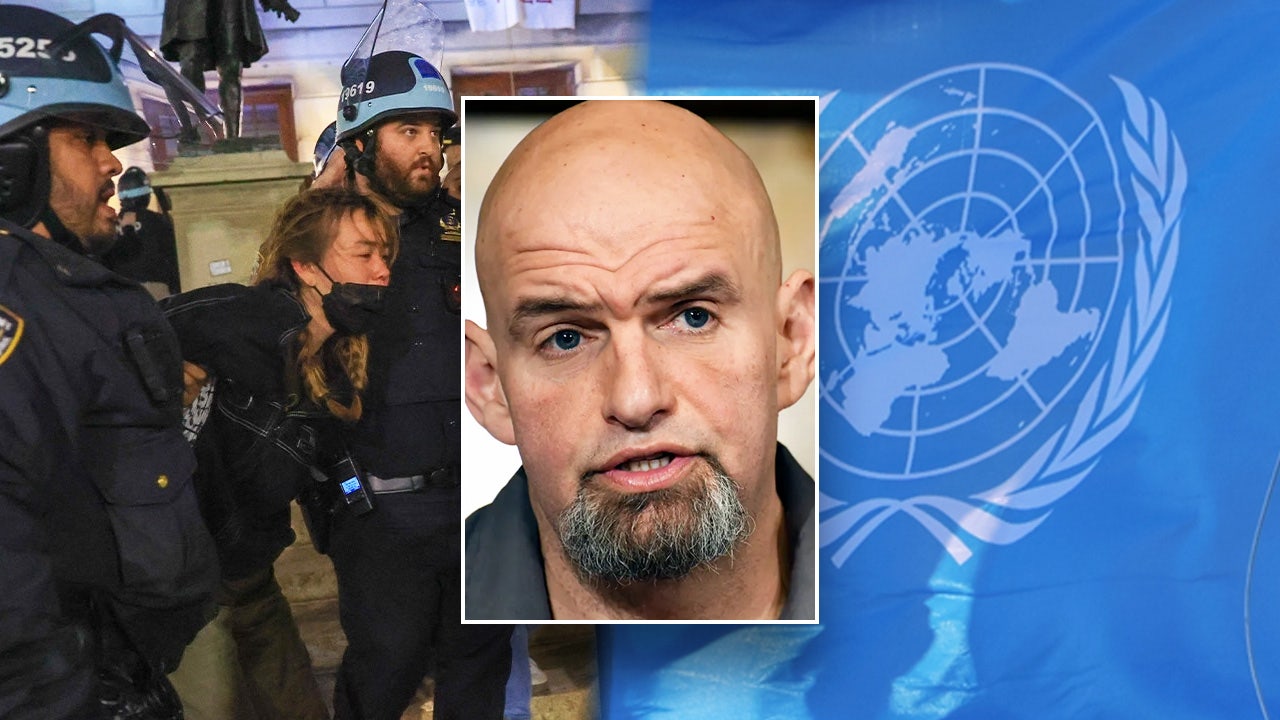
Fetterman criticizes UN rights chief for criticizing Israel without condemning Hamas
Sen. John Fetterman, D-Pa., criticized the United Nations for their silence on condemning Hamas months after the Oct. 7 attack while expressing dismay at the treatment of anti-Israel activists in the U.S.
Fetterman took to social media, lambasting the U.N. for failing to denounce Hamas despite their crimes against innocent Israeli civilians, including babies, children, women, and the elderly. He juxtaposed this with a headline from Reuters highlighting U.N. rights chief Volker Turk’s concern over the treatment of pro-Palestinian protesters at American universities.
Turk, the U.N. high commissioner for human rights, condemned what he saw as “disproportionate” responses by American police to anti-Israel demonstrations on college campuses. His statement emphasized the need to repudiate incitement to violence and hatred based on identities or viewpoints.
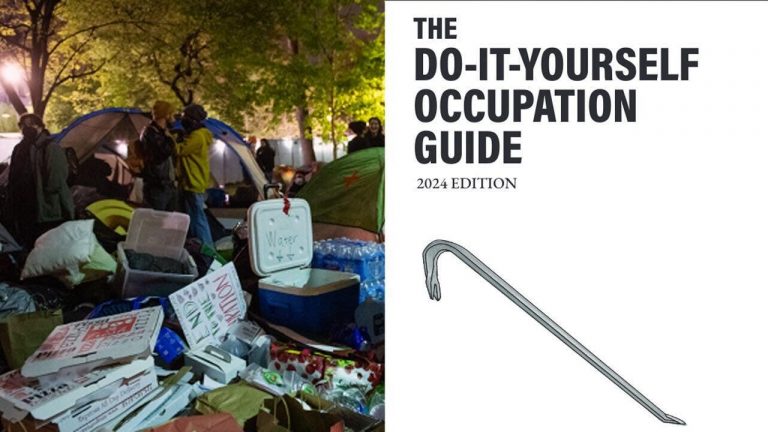
The recent escalation of anti-Israel protests led to chaos at the University of California, Los Angeles, and Columbia University in New York. Police intervention was necessary to restore order, with clashes between demonstrators and law enforcement officers at various campuses.
Turk stressed the importance of addressing violence on a case-by-case basis rather than painting all protesters with the same brush. He advocated for responses based on human rights law, preserving spaces for free expression, peaceful assembly, and vibrant debate.
The U.N. Secretary-General, Antonio Guterres, echoed the sentiment, emphasizing the importance of balancing freedom of expression with the rejection of hate speech. Guterres underscored the role of university authorities in managing protests effectively.
Efforts to condemn Hamas for the Oct. 7 attack, which resulted in mass killings and hostage-taking, have been hindered at the U.N. Security Council. Fetterman and others have criticized the lack of action against the terrorist group responsible for these atrocities.
American universities, grappling with the aftermath of prolonged conflicts in the Gaza Strip, have faced challenges in managing widespread protests. Ivy League institutions like Columbia University have emerged as focal points for anti-Israel demonstrations.
The University of Texas, Austin, took decisive action by suspending the Palestinian Solidarity Committee following student arrests. Similarly, other universities have grappled with balancing students’ right to protest with ensuring campus safety and order.
At Columbia University, protesters occupied buildings, leading to confrontations with law enforcement. Calls for divestment from Israel and greater transparency in university investments have been central to the ongoing demonstrations.
Despite the disruptions and tensions on campuses, university administrators have reiterated their commitment to student safety while acknowledging the complexities of balancing free speech and maintaining a conducive learning environment.