Georgia election board decides to hand count all ballots, raising concerns about November confusion.
Georgia State Election Board Votes in Favor of Hand Counting Ballots
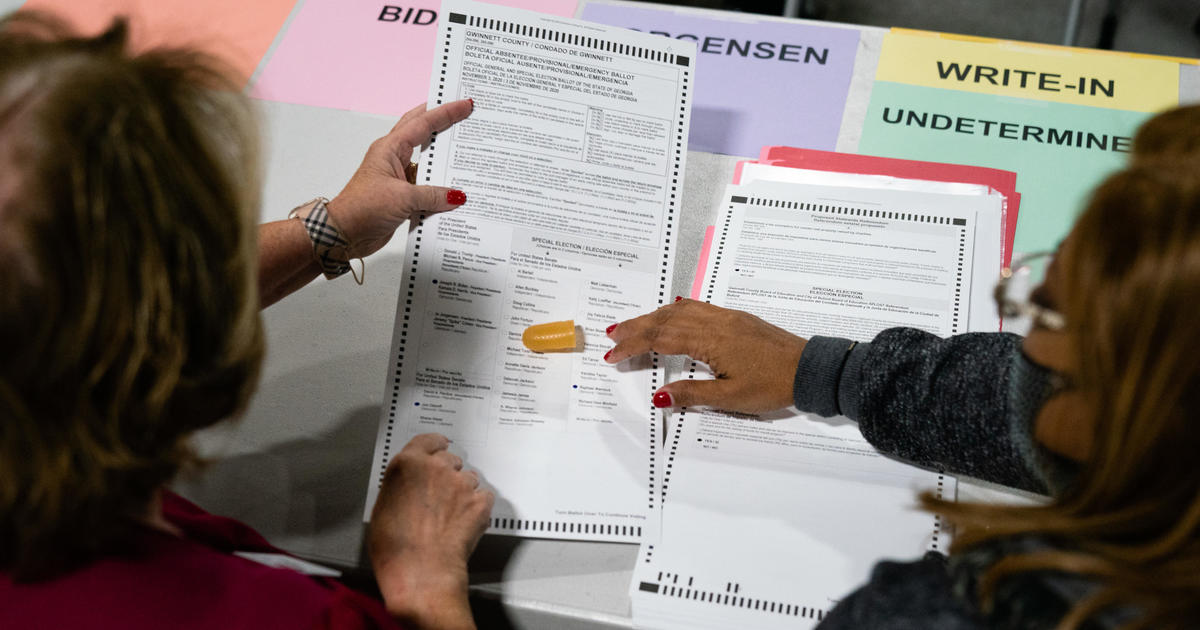
In a decisive move, the Georgia State Election Board voted on Friday to implement hand counting for all ballots in the upcoming November election. This decision, supported by a three-member pro-Trump majority on the board, signifies a significant shift in the state’s election procedures and could potentially lead to delays in reporting election results.
The proposal put forth by the board advocates for a meticulous hand count of ballots by precincts, in addition to the machine counts already in place. Under this new protocol, the poll manager alongside two poll officers will unseal the ballot boxes, count the votes manually, compare them with the machine count, and address any discrepancies that may arise.
Proponents of this measure argue that it will enhance the security and transparency of state elections. However, the board’s chair, John Fervier, expressed reservations about approving the rule. He cautioned that the board may be overstepping its legal boundaries by implementing this measure without specific statutory authority and suggested that the issue should be addressed by the Georgia Legislature.
Secretary of State Brad Raffensperger, Georgia’s top elections official, voiced his opposition to the hand-counting proposal in August. He labeled it as a “misguided” effort that could potentially prolong the reporting of election results and introduce risks to the chain of custody procedures.
The board faced additional heated discussions regarding a proposal to require hand counting during the early voting period, ultimately tabling the decision with a 4-1 vote. The concerns voiced by board member Janelle King reflected worries about introducing significant changes so close to the election but indicated a willingness to revisit the topic for future elections.
The backdrop for these deliberations lies in the contentious aftermath of Georgia’s pivotal role in the 2020 presidential election. Former President Donald Trump’s attempts to challenge his loss to Democrat Joe Biden placed the state under intense scrutiny. Many Democrats in Georgia fear that Trump-aligned Republicans are laying the groundwork for another potential bid to delegitimize the election results by manipulating election rules.
Senator Raphael Warnock, a Democrat from Georgia, underscored the concerns surrounding the election board’s actions, stating, “They are fully trying to set up a scenario in which they could refuse to certify an election whose results they don’t like.” The recent changes within the Georgia State Election Board, influenced by Trump allies, have sparked apprehension among Democrats, legal experts, and democracy advocates.
The newly introduced election rule changes have stirred controversy, particularly clauses requiring an undefined “reasonable inquiry” before certifying results and granting county election officials authority to scrutinize all election-related documentation. Critics argue that these rules could potentially be exploited by officials seeking to obstruct the certification process, leading to legal turmoil.
State Representative Saira Draper, an Atlanta Democrat and former state director of voter protection, highlighted the underlying motives behind these rule changes. She emphasized that the objective may not solely aim at halting certification but rather at sowing confusion within the electoral process to undermine public trust in the outcome.
As the Georgia State Election Board continues to deliberate over a series of additional rules, the board members advocating for these changes maintain that their primary goal is to ensure the accuracy of the vote. They dismiss concerns regarding intentional delays or obstructions in the certification process.
The implications of this evolving situation in Georgia extend beyond state borders, given the state’s pivotal role in deciding national elections. Disrupting the certification of election results, a process once regarded as routine but politicized by Trump’s baseless claims about the 2020 election, could potentially impact the ability of states to meet crucial deadlines for certifying electoral votes.
Legal experts, however, emphasize that while fears of local election boards refusing to certify votes exist, the legal framework in place prevents such unilateral actions. County officials do not hold the authority to reject results or delay certification, irrespective of any doubts they may harbor about the accuracy of the outcome.
Lauren Miller Karalunas, a legal historian at New York University’s Brennan Center, elucidated, “There is no space for local certifying officials to deviate from their duty during the certification process, which is solely to affirm the completeness of the results.”
Although the Georgia State Election Board does not determine election outcomes, the rules they establish play a crucial role in ensuring the smooth functioning of the electoral process and addressing violations or complaints. The current Democratic concerns regarding the board’s majority stem from its alignment with Trump’s agenda and the perceived erosion of electoral integrity.
Democratic discontent intensified following Trump’s public endorsement of the majority board members during a rally in Atlanta, where he lauded them as champions of transparency and honesty. Contrary to Trump’s claims, there was no widespread fraud in Georgia’s 2020 elections, and subsequent recounts reiterated Biden’s victory in the state.
Legal battles ensuing from the introduction of these new rules have further polarized political factions, with Democrats challenging the board’s authority and Republicans defending the measures. Lawsuits filed by both parties are set to be resolved in court, with implications for Georgia’s electoral landscape in the upcoming November elections.
Ongoing efforts to challenge the State Election Board’s actions include appeals to Governor Brian Kemp to remove the Trump-aligned members, citing ethical infractions. The reluctance of the governor to intervene has deepened the divide between political parties and exacerbated tensions in the lead-up to the impending elections.
The Georgia Association of Voter Registration and Election Officials has emerged as a vocal critic of the proposed rule changes, emphasizing their redundancy and potential to undermine the certification process. Election officials from various counties in Georgia have expressed concerns about the timing of these changes, citing the need for adequate preparation and avoiding errors that could compromise public confidence.
The debate surrounding the certification process has also seen Republican proponents argue that county election boards retain the right to decline to certify election results. However, legal precedent in Georgia and nationwide upholds the obligation of officials to certify results as mandated by law, emphasizing the non-negotiable nature of this duty.
Ultimately, the responsibility of certifying Georgia’s statewide vote rests with Secretary of State Raffensperger and Governor Kemp, emphasizing the critical role they play in upholding the integrity of the electoral process. Raffensperger’s unequivocal stance on the necessity of counties to fulfill their certification duties underscores the importance of adhering to established legal protocols.
The unfolding drama within the Georgia State Election Board encapsulates the broader tensions and challenges facing the American electoral landscape. As the nation braces for another significant electoral season, the outcomes in Georgia will serve as a litmus test for the resilience of democratic institutions and the rule of law.