Harris agrees that Trump’s campaign is fascist, according to Charlamagne tha God.
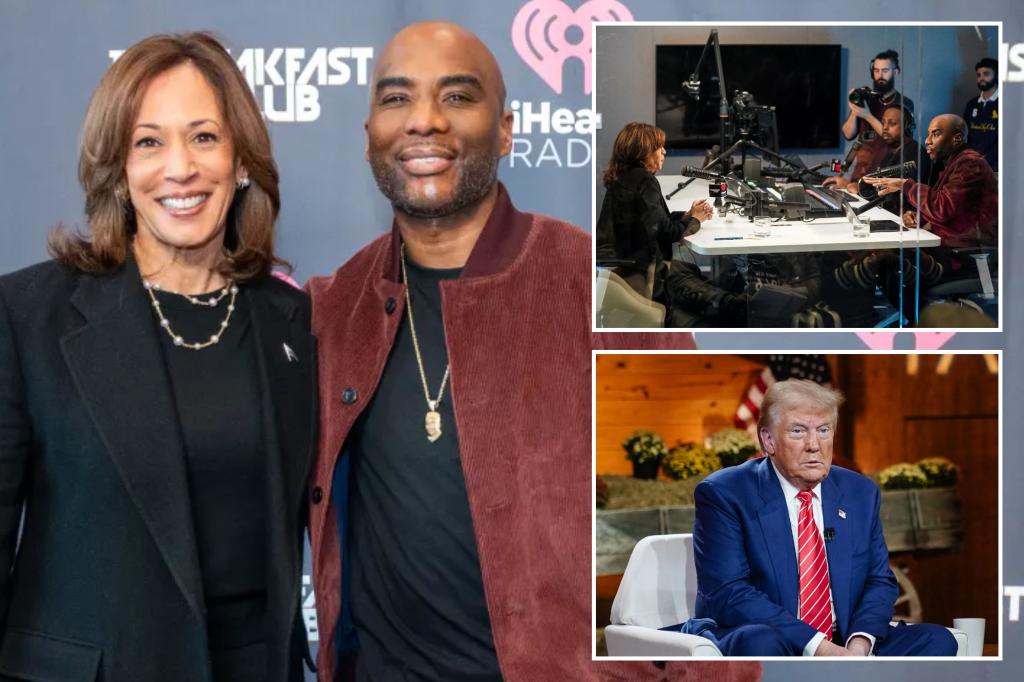
During a recent interview with Charlamagne tha God, Vice President Kamala Harris expressed agreement with his assessment that Donald Trump’s campaign is centered around the concept of fascism. This bold statement made waves across the political spectrum, sparking debates and discussions about the current state of American politics.
Charlamagne tha God, a prominent radio host known for his candid conversations on issues of race, politics, and social justice, did not mince words when he characterized Trump’s campaign as being rooted in fascist ideologies. His assertion caught the attention of Vice President Harris, who acknowledged the gravity of his statement during their conversation.
As the first African American and South Asian woman to hold the position of Vice President in the United States, Harris has been vocal about her commitment to advancing racial equality, social justice, and inclusion. Her agreement with Charlamagne tha God’s assessment of Trump’s campaign reflects her understanding of the dangers posed by divisive and authoritarian rhetoric in political discourse.
The term “fascism” carries significant historical weight, often associated with authoritarian regimes, suppression of dissent, and the glorification of a single leader. By aligning Trump’s campaign with this concept, Charlamagne tha God and Vice President Harris are drawing attention to what they see as a dangerous trend in contemporary politics.
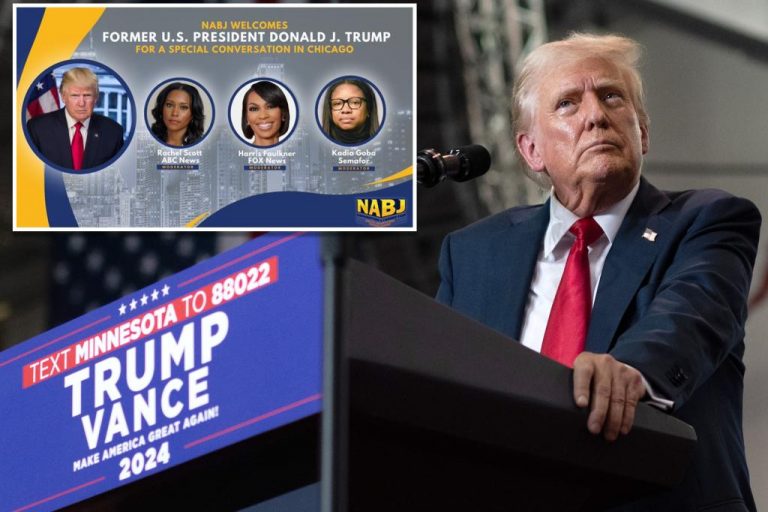
Trump’s presidency was marked by polarizing rhetoric, controversial policies, and a combative approach to governance. His supporters lauded his tough stance on issues such as immigration and national security, while critics accused him of inflaming racial tensions, undermining democratic norms, and eroding trust in institutions.
Charlamagne tha God’s characterization of Trump’s campaign as fascist is not without its detractors. Some argue that the term is overly simplistic and inflammatory, while others point to the lack of a clear definition of fascism in the context of American politics.
However, the central question remains: to what extent does Trump’s campaign reflect fascist tendencies, and what are the implications for the future of American democracy?
For many, the events of January 6, 2021, when a violent mob stormed the U.S. Capitol in an attempt to overturn the results of the presidential election, were a stark reminder of the fragility of democracy. The role of Trump in inciting the insurrection, with his repeated claims of election fraud and calls to “fight like hell,” has raised serious concerns about the influence of his rhetoric on his supporters.
In the aftermath of the Capitol riot, Trump was impeached for a historic second time, charged with “incitement of insurrection.” While he was ultimately acquitted by the Senate, the trial brought to light the deep divisions within the Republican Party and the broader political landscape.
Charlamagne tha God’s assessment of Trump’s campaign as fascist speaks to these larger issues of democratic governance, civic responsibility, and the need for a more inclusive and equitable society. By framing the conversation in these terms, he and Vice President Harris are challenging Americans to confront the uncomfortable truths of their political reality.
As we look towards the future, it is clear that the legacy of the Trump presidency will continue to shape the national conversation for years to come. Whether his campaign can be accurately labeled as fascist or not may be up for debate, but the impact of his actions on American society is undeniable.
Ultimately, the words of Charlamagne tha God and Vice President Harris serve as a reminder of the importance of vigilance, accountability, and active engagement in the political process. By staying informed, participating in civic discourse, and holding leaders accountable for their words and actions, we can work towards a more just and inclusive society for all.