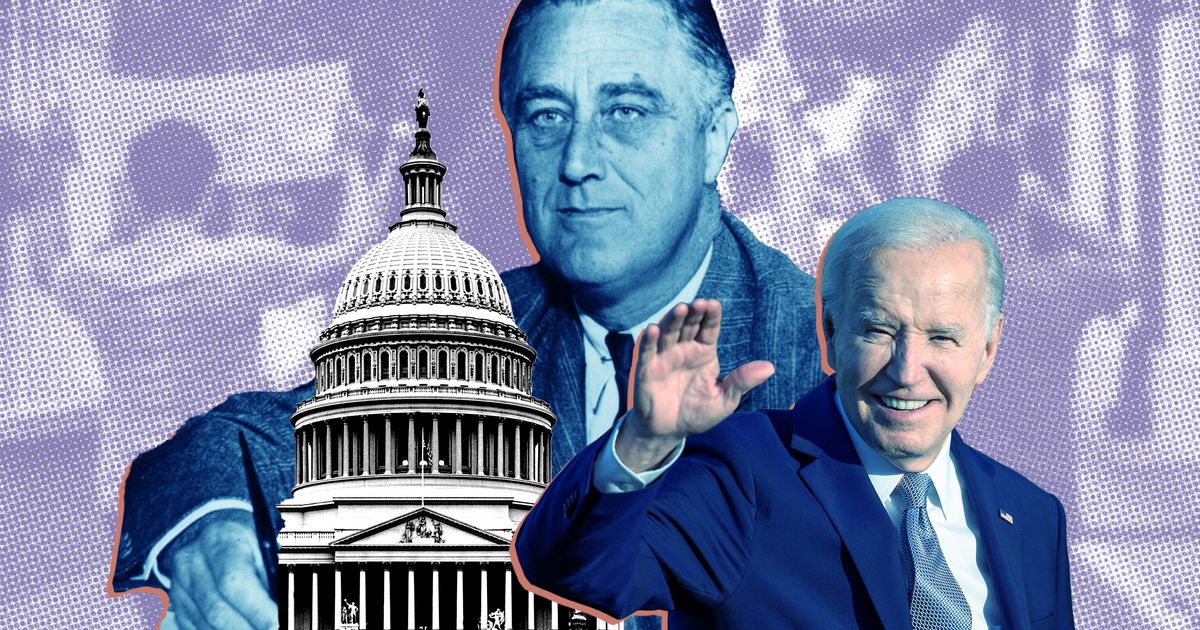
Is Joe Biden the most supportive president of unions?
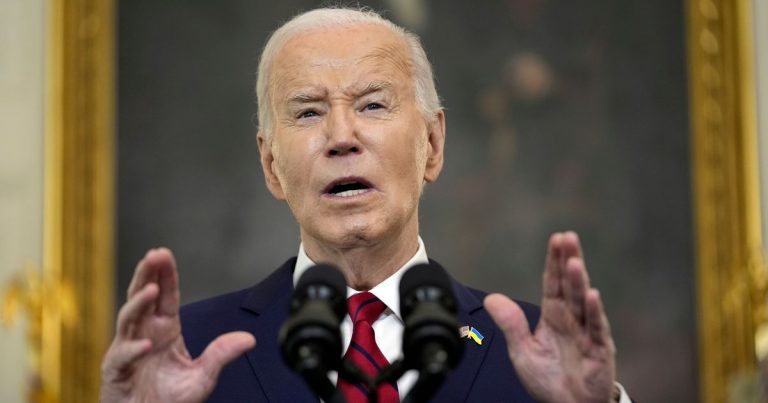
When it comes to being a staunch supporter of unions, President Joe Biden has made it clear that he wears that badge with pride. Throughout his time in office, he has emphasized the importance of collective bargaining and has taken concrete steps to support the labor movement in the United States.
Biden, affectionately known as Union Joe, has not shied away from championing the cause of workers’ rights. From appointing pro-union officials to key labor agencies to publicly admonishing employers who hinder unionization efforts, he has been a vocal advocate for workers. His recent unprecedented act of standing in solidarity with striking autoworkers further solidifies his commitment to supporting the labor movement.
Despite these efforts, union membership in the country remains at a historic low, with only a small fraction of workers being part of a union. It raises questions about the effectiveness of Biden’s pro-labor policies in revitalizing the labor movement. Additionally, there is concern that these initiatives, crafted without Congress’s cooperation, could be undone by future administrations, potentially erasing Biden’s imprint on supporting unions.
Comparisons have been drawn between Biden and former President Franklin D. Roosevelt, who is renowned for his New Deal policies that laid the foundation for widespread unionization. While Biden’s pro-union stance is commendable, experts weigh in on whether he truly deserves the title of the most pro-union president in U.S. history.
Joseph McCartin, a professor at Georgetown University, acknowledges Biden’s achievements in bolstering the Democratic party’s alliance with unions in a post-neoliberal era. He suggests that Biden’s legacy in prioritizing labor concerns within the party could outlast his tenure, akin to how FDR’s union-friendly policies endured beyond his presidency.
Eileen Boris, from the University of California, Santa Barbara, highlights FDR’s landmark legislations that solidified worker rights during the New Deal era. She points out that Vice-President Kamala Harris may potentially surpass Biden’s legacy by championing care infrastructure reforms essential for the evolving labor landscape.
On the other hand, Gabriel Winant of the University of Chicago critiques Biden’s approach, noting that while his administration has been pro-union, it has lacked a coherent vision for societal and economic transformation. He argues that Biden’s reluctance to embrace progressive policies has hindered a more impactful shift towards a fairer economy.
Nelson Lichtenstein, also from the University of California, Santa Barbara, stresses that Biden’s sentiment in supporting unions is laudable, but true transformative governmental policies are paramount. He underscores FDR’s revolutionary legislative and administrative actions that reshaped the landscape for unions, setting a higher bar for pro-union presidents.
Tejasvi Nagaraja from Cornell University lauds Biden for his progressive NLRB and vocal support for specific union campaigns. However, he warns that Biden’s policies in other areas, such as immigration, could affect his overall legacy in supporting labor rights.
Jeff Schuhrke, from Empire State University, acknowledges Biden’s efforts in being union-friendly but cautions that the bar for such a title has historically been low. He emphasizes the importance of unions leveraging their collective power to influence future administrations to prioritize labor interests.
Annelise Orleck, a professor at Dartmouth College, accentuates the significance of Biden’s vocal advocacy for unions. She credits his concrete achievements, such as raising the minimum wage for federal contract employees and enacting legislation creating millions of new jobs with fair-wage standards. She believes that Biden has lived up to his campaign promise of being the most pro-labor president since FDR.
In conclusion, while the debate continues on whether Joe Biden truly deserves the title of the most pro-union president in American history, there is consensus on his unwavering support for the labor movement. As his presidency nears its end, the legacy of Biden’s pro-labor policies and their lasting impact on workers’ rights will undoubtedly be a topic of reflection for years to come.