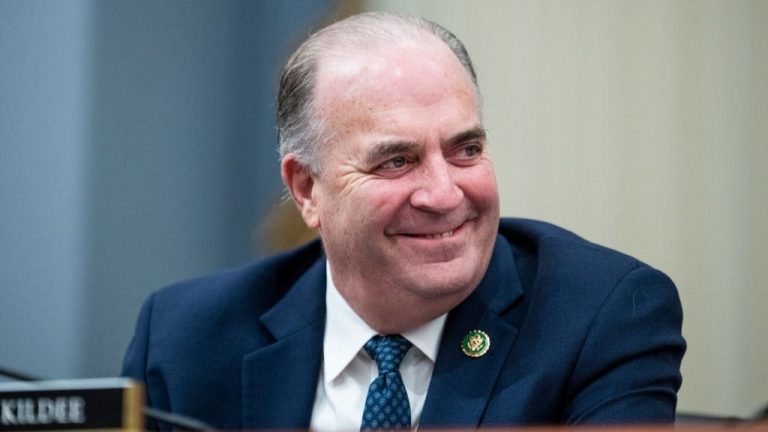
McCarthy says Dems and media treat Biden’s privilege claim differently than Trump’s.
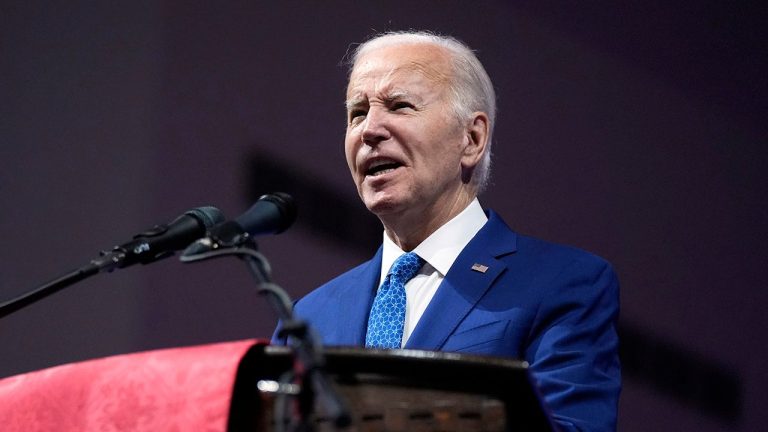
President Biden’s assertion of executive privilege to prevent recordings of his interviews with special counsel Robert Hur from being released shares some similarities with former President Trump’s attempts to use privilege while in the White House, according to one legal expert.
Though transcripts of Biden’s interview with Hur have already been released to a committee, the White House asserted executive privilege to block the audio recordings from becoming public while arguing in lockstep with Attorney General Merrick Garland that “law enforcement files like these need to be protected.”
“For example, during the Mueller investigation, Trump made available Don McGahn, who was the White House counsel. They not only let Mueller interview McGahn at length, but McGahn took voluminous notes of his conversations with Trump, which they also turned over. And then Democrats wanted to subpoena McGahn to come to the House Judiciary Committee, and the Republicans fought it,” explained a legal expert.
Executive privilege has been around since the earliest days of the country and gives the executive branch the ability to withhold certain internal discussions and documents from scrutiny by the courts and the legislative branch. It allows the president some breathing room for his own deliberations with staff.
“The fact is that since the Republic started, presidents have been withholding information from Congress,” McCarthy said.
Congress has a variety of tools it can use to pry information out of the executive branch, including by holding people in contempt.
“Congress has a whole arsenal of stuff from the Constitution, powers that it can use to fight back and pry information out of the executive branch,” McCarthy said. “You know, you can slash budgets or hold up appointments, and if it gets bad enough, you can start holding people in contempt. … The final option, obviously, is impeachment.”
McCarthy warned, however, that if the president’s party has enough influence in Congress, those efforts can be more challenging.
“If the president’s party has enough sway in Congress that you can stop that arsenal from being used, then the whole thing is just a political calculation,” he said. “Like for Biden here, it’s how much worse would I be hurt by letting the tape come out or the recording come out than by stonewalling. It looks like the tape is so bad, he’s decided that even though he’s going to be damaged by stonewalling, that’s better than letting the tape out.”
McCarthy also highlighted how the media has reacted to Biden’s assertion of executive privilege, saying they’ll report on the matter in an attempt to preserve their integrity and then move on from it to “help Biden bury it.”
Garland on Thursday defended Biden’s decision to assert executive privilege, saying the subpoena for audio recordings “is one that would harm our ability in the future to successfully pursue sensitive investigations.”
“There have been a series of unprecedented, frankly, unfounded attacks on the Justice Department. This request, this effort to use contempt as a method of obtaining our sensitive law enforcement files is just the most recent effort to threaten, defund our investigations, and the way in which there are contributions to an atmosphere that puts our agents and our prosecutors at risk,” he added.
That “longstanding position,” however, was challenged following Trump’s term in the White House and the Capitol protests Jan. 6, 2021.
Two individuals who served in the Trump administration and raised executive privilege claims — former White House chief strategist Steve Bannon and former Trump adviser Peter Navarro – have been convicted of contempt of Congress and sentenced to serve jail time for their refusal to comply with subpoenas issued by the now-defunct House select committee investigating the Capitol protests.
Bannon, 70, was sentenced to four months in prison in October 2022 and a $6,500 fine for ignoring a congressional subpoena.
Bannon’s appeal was denied last week after the U.S. Court of Appeals for the D.C. Circuit released a 20-page opinion that said granting Bannon’s appeal would “hamstring Congress’s investigatory authority.” Bannon claimed he acted on the advice of his legal team and did not intend to break the law. Judge Bradley Garcia wrote that the acting on “advice of counsel” defense is “no defense at all.”
Similarly, Navarro, who reported to prison in Miami in March following an order from the U.S. Supreme Court, was charged and convicted with contempt of Congress after he refused to comply with a congressional subpoena demanding his testimony and documents relating to the events of Jan. 6.
Though Navarro is attempting to appeal his contempt of Congress conviction, the court refused to postpone his imprisonment until after the appeal is concluded. Navarro claimed he could not cooperate with the committee investigating the Jan. 6 attack because Trump had invoked executive privilege, an argument that lower courts have rejected.
Biden’s decision to assert the privilege, according to White House press secretary Karine Jean-Pierre, came at the request of Garland. Jean-Pierre said it was Garland’s suggestion that “law enforcement files like these need to be protected.”
The House Judiciary Committee on Thursday advanced a resolution to hold Garland in contempt of Congress over the Justice Department’s failure to produce the subpoenaed audio recording of Biden’s interview with Hur. The vote advances the measure for a full floor vote.
Hur led the investigation into Biden’s handling of classified documents after his departure as vice president under the Obama administration. Hur announced in February that he would not recommend criminal charges against Biden for possessing classified materials after his vice presidency, saying Biden is “a sympathetic, well-meaning, elderly man with a poor memory.” The findings sparked widespread outrage that Biden was effectively deemed too cognitively impaired to be charged with a crime but could serve as president. Trump has meanwhile slammed the disparity in charges as a reflection of a “sick and corrupt, two-tiered system of justice in our country.”