Netanyahu Meets Biden and Harris at White House
Israeli Prime Minister Benjamin Netanyahu made a crucial visit to the White House to discuss the ongoing war in Gaza and the urgent need for a cease-fire with President Joe Biden and possibly Democratic nominee Vice President Kamala Harris.
Netanyahu’s visit marked his first trip to the White House since 2020, during the administration of former President Donald Trump. The timing of this meeting is significant as both Israel and the U.S. face mounting pressure to find a resolution to the nine-month conflict that has resulted in over 39,000 casualties in Gaza and 1,200 deaths in Israel. Additionally, dozens of Israeli hostages remain in captivity under Hamas.
White House national security spokesman John Kirby emphasized that President Biden’s primary goal during the discussions was to urge both Israel and Hamas to swiftly reach a cease-fire agreement that would lead to the release of the remaining hostages. While negotiations are reaching a critical phase, there are still unresolved issues that need to be addressed.
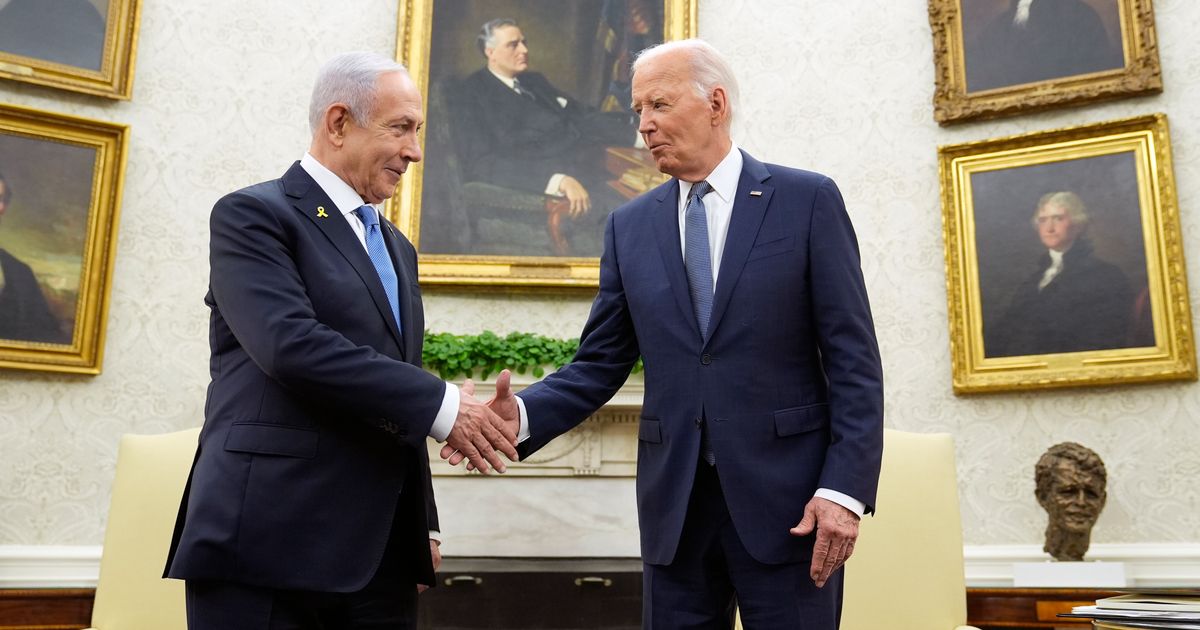
During the meeting, Netanyahu expressed his gratitude to President Biden for his service. The relationship between the conservative Likud Party leader and the centrist Democrat has seen its share of challenges over the years. Netanyahu, in what could potentially be his final White House meeting with Biden, reflected on their 40-year association.
Biden reciprocated Netanyahu’s sentiments and reminisced about his first meeting with an Israeli Prime Minister, Golda Meir, back in 1973 when he was just 12 years old.
One of the key topics of discussion was a U.S.-backed proposal to secure the release of the remaining hostages in Gaza through a phased approach. This initiative could serve as a significant achievement for President Biden and Vice President Harris, potentially influencing their legacies and political futures.
After their deliberations, Biden and Netanyahu met with the families of American hostages, underscoring the emotional toll of the conflict on individuals directly impacted.
Vice President Harris’s engagement with Netanyahu is an opportunity for her to showcase her leadership capabilities in addressing a complex international crisis. She has faced scrutiny from both ends of the political spectrum – from those demanding a tougher stance on Israel to Republicans questioning her allegiance to the country.
A senior administration official reiterated that there is a unified approach between President Biden and Vice President Harris on matters related to Israel. While Harris’s direct interactions with Netanyahu have been limited, she has been actively involved in numerous discussions between Biden and the Israeli Prime Minister.
Netanyahu, on his part, is navigating a delicate balance between pressures from hostage families advocating for a cease-fire and demands from far-right factions of his coalition to maintain a strong military stance against Hamas.
In a passionate address to Congress, Netanyahu staunchly defended Israel’s actions during the conflict and criticized accusations of war crimes by the International Criminal Court. He emphasized Israel’s role in countering Iran-backed Hamas and highlighted the shared interests between the U.S. and Israel in the Middle East.
During his speech, Netanyahu acknowledged Biden’s support post the October 7 attack and also praised former President Trump for his favorable policies towards Israel, including recognizing Israeli sovereignty over the Golan Heights.
Both Biden and Harris condemned the display of pro-Hamas sentiments and the burning of the American flag during protests near the U.S. Capitol. The gravity of the situation was underscored by these actions, which were widely denounced by political leaders.
The protests near the White House calling for Netanyahu’s arrest and the effigy depicting him with blood-stained hands symbolize the heightened tensions surrounding the conflict. While some demonstrators expressed solidarity with Hamas, a minority of counter-protesters displayed Israeli flags in a show of support.
The absence of Vice President Harris from Netanyahu’s Congressional address sparked criticism from Trump and Republican allies, although White House officials clarified that it was due to scheduling conflicts and not a deliberate snub.
Harris’s longstanding support for Israel, underscored by her personal and political connections to the country, has been evident throughout her career. Her alignment with President Biden’s approach to the crisis has been largely consistent, with occasional calls for more robust action to address civilian suffering in Gaza.
The high-stakes discussions between Netanyahu and the U.S. administration underscore the complex dynamics of the Israel-Gaza conflict and the imperative of reaching a viable resolution to ensure lasting peace in the region.