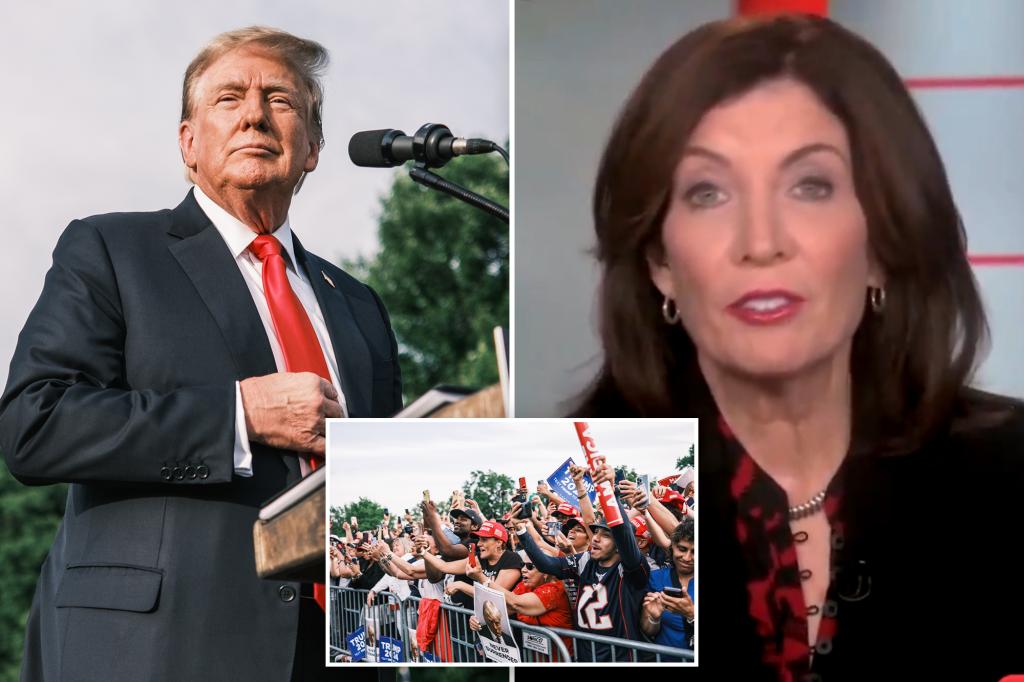
NY Governor Hochul Calls Trump Supporters ‘Clowns’
NY Gov. Kathy Hochul recently stirred controversy by referring to Trump supporters as “clowns” during a public interview. This remark has caused outrage among many individuals, both in support and opposition to the Governor. Hochul made the comment while discussing the impact of the former President’s influence on the current political landscape.
The Governor’s statement has drawn criticism from various quarters, with some labeling it as divisive and disrespectful. Supporters of former President Trump have expressed their displeasure, citing it as an example of the intolerance and elitism that they believe is prevalent among certain politicians.
On the other hand, some have come to Hochul’s defense, arguing that her remarks were taken out of context and that she has the right to express her opinions freely. They view her comment as a reflection of the growing political polarization in the country and believe that it is important to engage in open and honest conversations, even if they are uncomfortable.
Regardless of one’s stance on the issue, it is clear that the Governor’s words have ignited a debate about the state of politics in America and the role that leaders play in shaping public discourse. The incident also raises questions about the nature of political rhetoric and the impact it has on public perception.
As we navigate through these turbulent times, it is essential to remember the importance of respect and civility in political discourse. While disagreements are inevitable, it is crucial to approach them with an open mind and a willingness to listen to different perspectives.
It is also essential for leaders to lead by example and strive to foster an environment where diverse opinions are valued and respected. By promoting respectful dialogue and understanding, we can work towards building a more united and cohesive society.
In conclusion, the controversy surrounding Gov. Kathy Hochul’s remarks highlights the need for constructive and respectful dialogue in politics. As we move forward, let us strive to engage in meaningful conversations that lead to understanding and unity, rather than division and animosity.