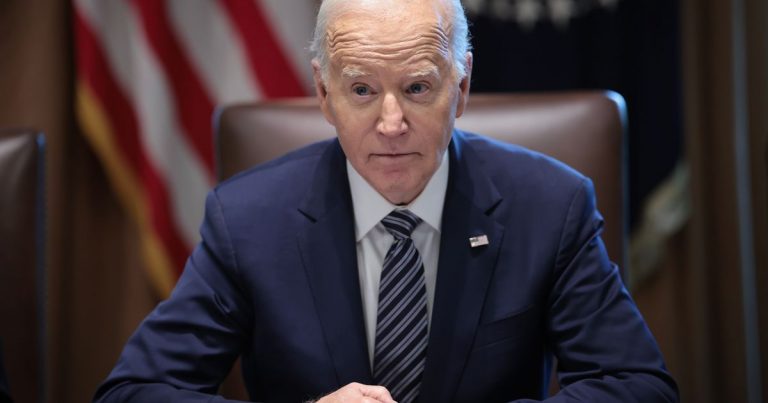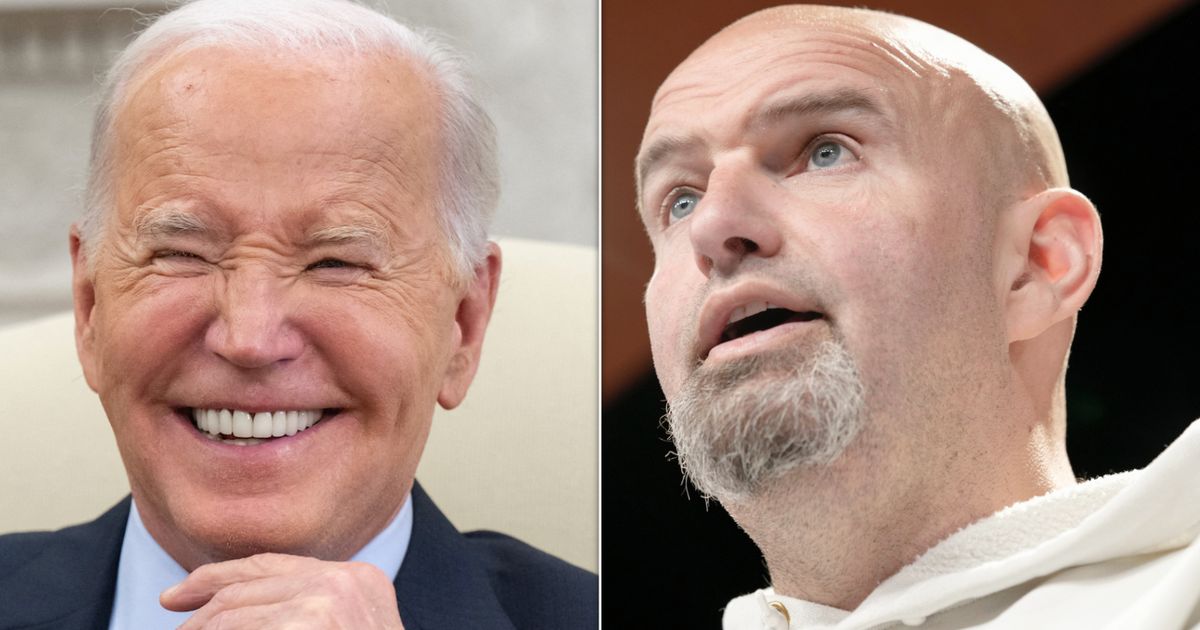
Senator Fetterman thinks Biden should use some of Trump’s strategies.
During a recent interview with journalist Andrew Desiderio, Pennsylvania Senator John Fetterman made a surprising statement that caught many off guard. When asked if he planned on advocating for President Biden while meeting with fellow Democrats, Fetterman’s response was nothing short of unexpected.
Instead of pledging his support for the current administration, Fetterman’s retort took a rather unconventional turn that some described as reminiscent of a Trumpian style. His suggestion involved encouraging Biden to emulate some of the controversial actions associated with former President Trump, such as having an affair with a porn star or making outlandish revenge-driven statements, all while hinting at a potential 2025 comeback plan.
While it’s highly unlikely that President Biden will consider Fetterman’s advice seriously, the senator’s remarks found favor among a segment of the public, particularly on social media platforms like X (formerly Twitter).
The notion of a Democratic leader adopting tactics commonly associated with their Republican counterparts sparked a lively debate online, with supporters and detractors alike weighing in on the potential benefits or drawbacks of such an approach. Fetterman’s bold suggestion not only turned heads but also reignited discussions about the political strategies employed by both parties and the changing nature of political discourse in the United States.
For many observers, Fetterman’s statement symbolizes a growing trend of unconventional political tactics being employed across party lines. In an era marked by heightened polarization and escalating rhetoric, the boundaries between traditional party norms are becoming increasingly blurred, with politicians on both sides of the aisle willing to push the envelope in pursuit of their objectives.
While some applauded Fetterman’s willingness to challenge the status quo and think outside the box, others expressed concerns about the potential consequences of normalizing behavior that strays from established political conventions. The debate surrounding the appropriateness of employing controversial strategies, even in jest, underscores the complex dynamics at play within the current political landscape.
As the political landscape continues to evolve, questions about the role of satire, irony, and parody in shaping public discourse become more relevant than ever. Fetterman’s remarks, though delivered in a seemingly lighthearted manner, serve as a reminder of the power dynamics at play within the political sphere and the ways in which language and rhetoric can influence public perceptions.
Ultimately, whether Fetterman’s comments were meant as a playful jab or a serious critique of political norms, one thing remains clear: the intersection of humor and politics is a complex and multifaceted terrain that continues to challenge our assumptions about what is acceptable or appropriate in public discourse.