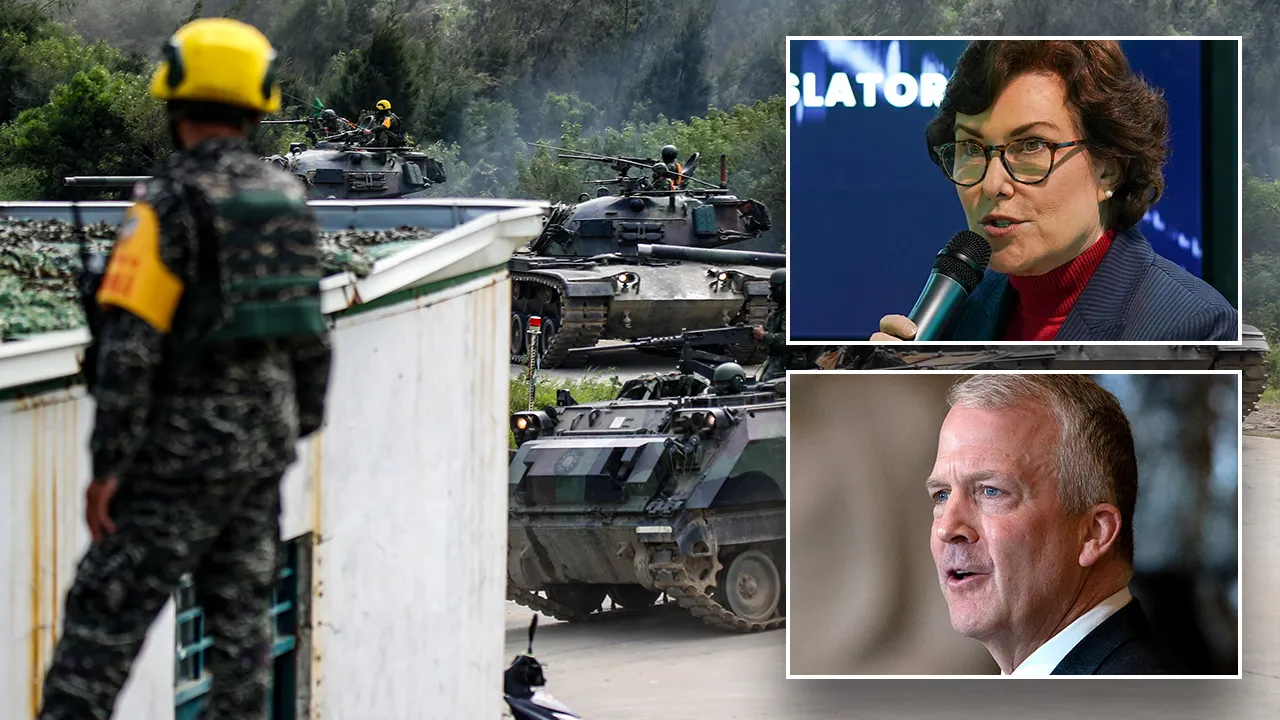
Senator from Democratic party is working with both parties to make Taiwan supply chain stronger because of threat from China.
The United States Senate has taken a significant step in fortifying Taiwan against growing military threats from China. Sen. Jacky Rosen from Nevada led a bipartisan group in introducing the Transpacific Allies Investing in Weapons to Advance National (TAIWAN) Security Act along with Republican Sen. Dan Sullivan of Alaska. This bill aims to bolster Taiwan’s defenses and enhance its supply chain resilience in the face of China’s aggressive stance on reunification with the island.
Joining Rosen and Sullivan in this crucial bipartisan effort are Sens. Tim Kaine, Rick Scott, Tammy Duckworth, and Joni Ernst, representing both the Democratic and Republican parties. The introduction of this bipartisan bill signifies a united front in bridging the gap between the U.S. and Taiwan for mutual security and defense interests.
What sets this bill apart is its focus on reinforcing the U.S.-Taiwan relationship while proactively addressing potential challenges in the supply chain and military readiness. The legislation mandates that Secretary of Defense Lloyd Austin consider enhancing defense industrial base cooperation between the two nations, paving the way for closer collaboration in defense technologies and capabilities.
The TAIWAN Security Act is not limited to just the Senate; it is also bicameral, with a House version introduced by Reps. Michelle Steel and Steven Horsford. This bipartisan and bicameral support underscores the bipartisan consensus on the critical importance of fortifying Taiwan in the face of escalating tensions with China.
Sen. Rick Scott emphasized the urgency of supporting Taiwan as a peaceful and democratic ally in the face of Communist China’s aggressive ambitions. He condemned President Xi Jinping’s authoritarian agenda and stressed the need for the U.S. to stand by Taiwan in defending democracy and freedom in the region.
Recent bipartisan efforts have culminated in a $95 billion foreign aid supplemental package passed by Congress and signed into law by President Biden. This package includes $8 billion dedicated to enhancing Taiwan’s security and fortifying the broader Indo-Pacific region against Chinese threats, underscoring the U.S. commitment to supporting its allies in the region.
While the U.S. aid package received praise from allies like Israel and Ukraine, it drew sharp criticism from China. The Chinese government denounced the aid as a violation of its sovereignty and a breach of the “One China” principle, which considers Taiwan a part of China’s territory. Chinese Foreign Ministry spokesperson Lin Jian issued a stern warning, threatening to take decisive actions to protect its interests in the region.
President Xi Jinping’s administration has consistently opposed any U.S. military assistance to Taiwan, viewing it as support for separatist forces seeking independence from China. The Chinese government’s rhetoric on the issue reflects its heightened concerns about Taiwan’s growing international support and the threat it perceives to its territorial integrity.
In a recent Senate hearing, a U.S. Indo-Pacific Command admiral warned lawmakers about China’s aggressive military buildup and readiness to potentially invade Taiwan by 2027. This alarming assessment underscores the real and present danger posed by China’s militarization and expansionist ambitions in the region.
As tensions between the U.S., Taiwan, and China continue to escalate, bipartisan efforts like the TAIWAN Security Act play a critical role in strengthening Taiwan’s defenses and deterring Chinese aggression. The bipartisan support for Taiwan reflects a shared commitment to upholding democratic values, protecting regional stability, and countering authoritarian threats in the Indo-Pacific.