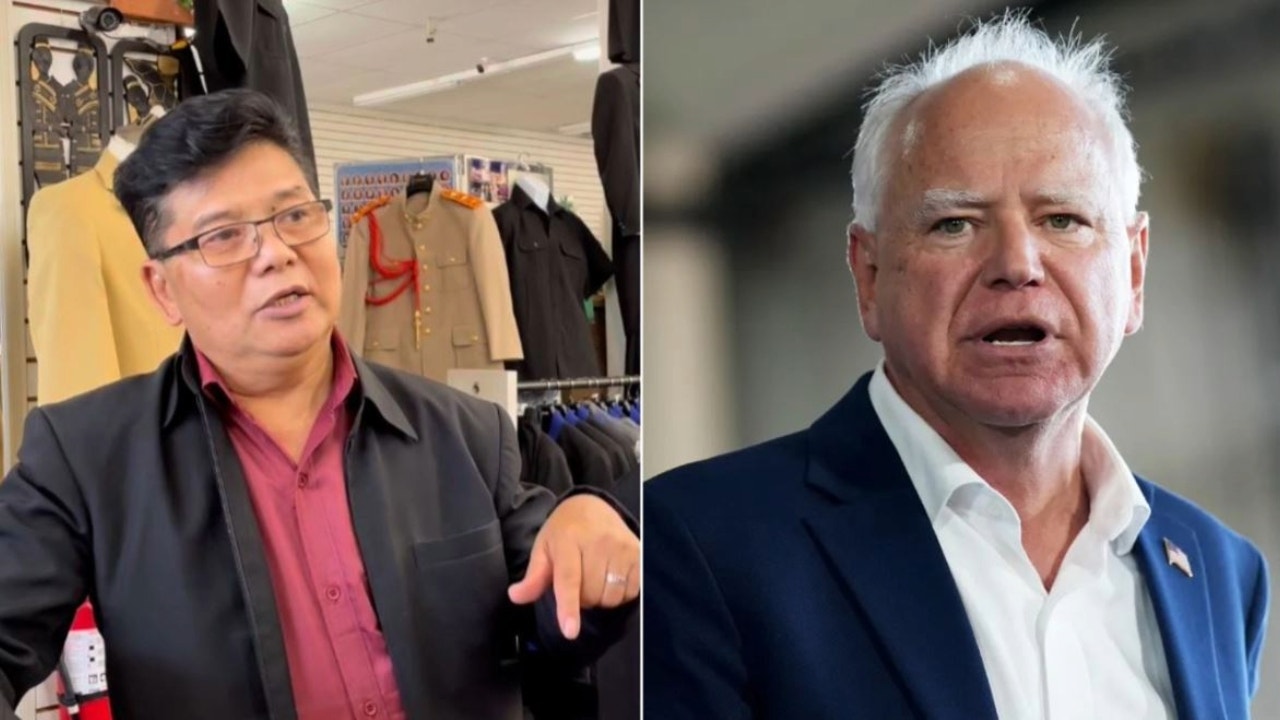
Shop owner shares his heartbreaking experience after BLM riots damaged his store while Gov Walz was in charge.
As the sun set on the city of Minneapolis in 2020, Her, a Hmong immigrant and proud small business owner, felt a creeping sense of fear in his heart. The streets that he had called home for decades were now engulfed in chaos and destruction.
That night, as Her made his way back to his store, he hoped against hope that the violence would spare his livelihood. But when he arrived the next morning, his worst fears became a stark reality.
The store that he had poured his blood, sweat, and tears into had been ransacked and looted. The reinforced door that was meant to protect his life’s work was smashed to pieces, and all of his inventory, worth an estimated $200,000, was gone.
Her vividly remembers the moment when the rioters mercilessly tore through his store, leaving behind a trail of devastation. “They took down the front door with the metal bars, they had some pliers they used to destroy the metal bars. And they came in there and took everything, took all the clothing, all the merchandise and my store,” he recounted.
But it wasn’t just the physical and financial loss that weighed heavily on Her. The emotional toll of witnessing his community torn apart in the midst of unrest was something that lingered long after the dust had settled.
Governor Tim Walz, who had hesitated to call in the National Guard during the riots, faced harsh criticism from Her and other business owners who felt abandoned in the face of chaos. Her’s plea for empathy and understanding from those in positions of power resonates deeply with many who felt the impact of the unrest.
Her’s struggle to rebuild his business in the aftermath of the riots reflects a larger pattern of economic and social upheaval in Minneapolis. The once-thriving city has seen a decline in public safety, with a rise in theft and vandalism plaguing small business owners.
Before the events of 2020, safety was not a major concern for business owners in the Twin Cities. But in the wake of the pandemic and civil unrest, the landscape has shifted dramatically, leaving many feeling vulnerable and unprotected.
As calls to defund the police reverberate through Minneapolis, Her stands firm in his belief that robust law enforcement is essential for the safety and security of both businesses and residents. The understaffed police department and shrinking police force have left many feeling exposed and at risk.
Regardless of political affiliation, Her advocates for a nonpartisan approach to public safety, emphasizing the need for more officers on the streets to combat crime and protect the community.
Looking ahead to the future, Her expresses a mix of hope and apprehension. The freedom and opportunities that America offers are cherished deeply, but the scars of past traumas loom large.
With a steely determination, Her calls on elected officials to prioritize the safety and well-being of their constituents. The lessons of history must not be forgotten, and steps must be taken to prevent the devastation of the past from repeating itself.
In the end, Her’s story is not just one of loss and resilience. It is a powerful reminder of the resilience and strength of the human spirit in the face of adversity, and the unwavering resolve to rebuild, no matter the cost.