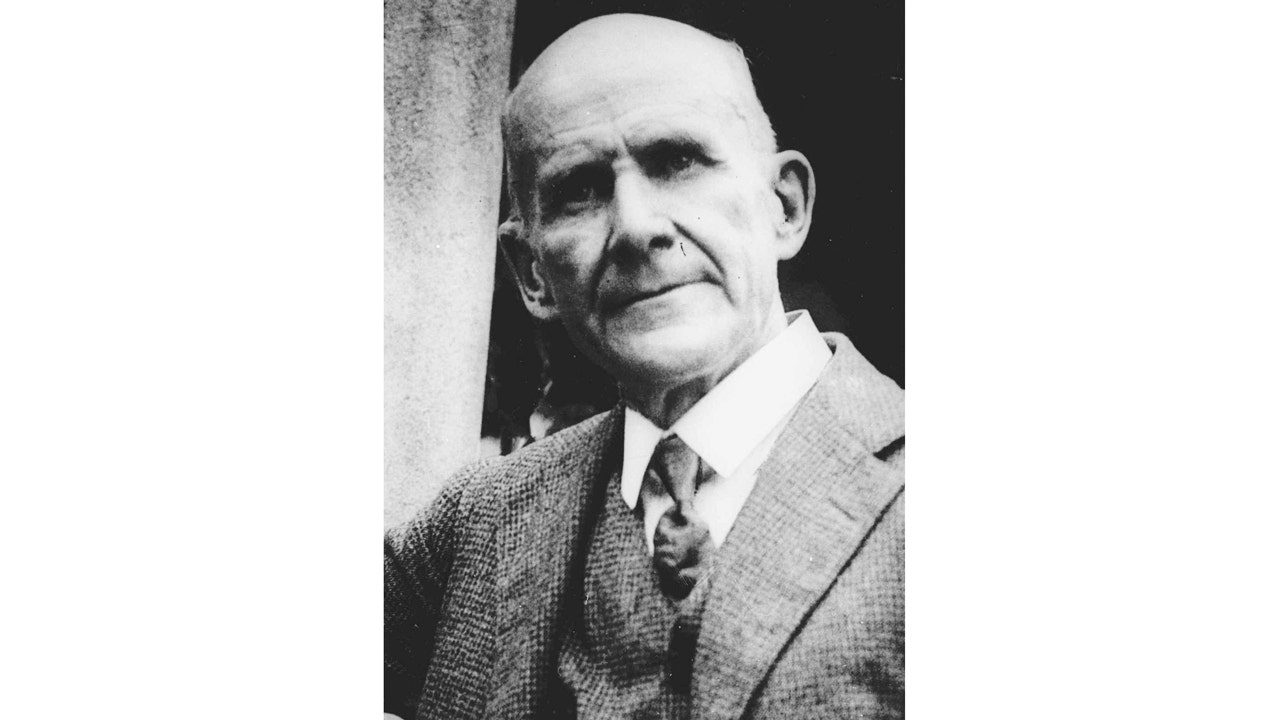
Socialist candidate Eugene Debs campaigns from prison
Former president and presumptive Republican nominee Donald Trump is currently awaiting sentencing following an unprecedented felony conviction. While his potential incarceration hangs in the balance, the possibility of his return to the White House remains a looming question mark.
Interestingly, Trump would not be the first candidate to run for the presidency while behind bars. That unique distinction belongs to Eugene V. Debs, who ran on the Socialist Party ticket in 1920 and remarkably received nearly a million votes, equivalent to about 3 percent of the popular vote.
Despite the obvious disparities in circumstances, there are intriguing parallels between Debs’ historic candidacy and Trump’s current situation. Debs, a fervent advocate for labor causes, was no stranger to conflict with the authorities. His imprisonment for speaking out against World War I and subsequent presidential campaign showcase a remarkable melding of activism and political ambition.
A Champion of the People
Eugene V. Debs, born in 1855, dedicated his life to championing the rights of laborers and advocating for socialist principles. His involvement in the labor movement was profound, leading to his incarceration following the Pullman rail strike in 1894. This initial brush with the law only served to embolden Debs’ commitment to social and economic justice.
A stalwart member of the Socialist Party of America, Debs ran for president on the socialist ticket in multiple elections, including notable campaigns in 1900, 1904, 1908, and 1912. His unyielding dedication to socialist ideals and advocacy for the working class solidified his place as a prominent figure in American politics.
Facing Adversity with Resilience
Debs’ unwavering stance against American involvement in World War I resulted in his imprisonment in 1918 under the newly enacted Sedition Act. Despite incarceration in a federal prison in Atlanta, Debs continued to command attention and respect within political circles. His resilience in the face of adversity only heightened his appeal as a symbol of resistance against oppressive policies.
The 1920 Presidential Campaign
Amidst his imprisonment, Debs once again found himself nominated as the presidential candidate for the Socialist Party in 1920. While physically confined, his campaign maintained a robust presence through creative means. Campaign buttons featuring his convict number and surrogate speakers kept Debs’ message alive, resonating with voters across the nation.
Thomas Doherty, a professor of American Studies at Brandeis University, highlighted the significance of Debs’ campaign from prison. Despite the challenges posed by his confinement, Debs’ notoriety and defiance captured the imagination of the electorate, positioning his candidacy as a legitimate force in the political landscape.
The Enduring Legacy of Debs
Eugene V. Debs’ remarkable journey from labor organizer to presidential candidate underscores the enduring power of conviction and activism. His unapologetic advocacy for socialist principles and unwavering commitment to social justice continue to inspire generations of Americans to challenge entrenched power structures and fight for a more equitable society.
As the specter of imprisonment looms over Donald Trump’s political future, the precedent set by Eugene V. Debs serves as a poignant reminder that even behind bars, the flame of political ambition can burn brightly. Whether Trump’s trajectory mirrors that of Debs remains to be seen, but the echoes of history remind us that the pursuit of justice knows no bounds.