Supreme Court removes ban on bump stocks.
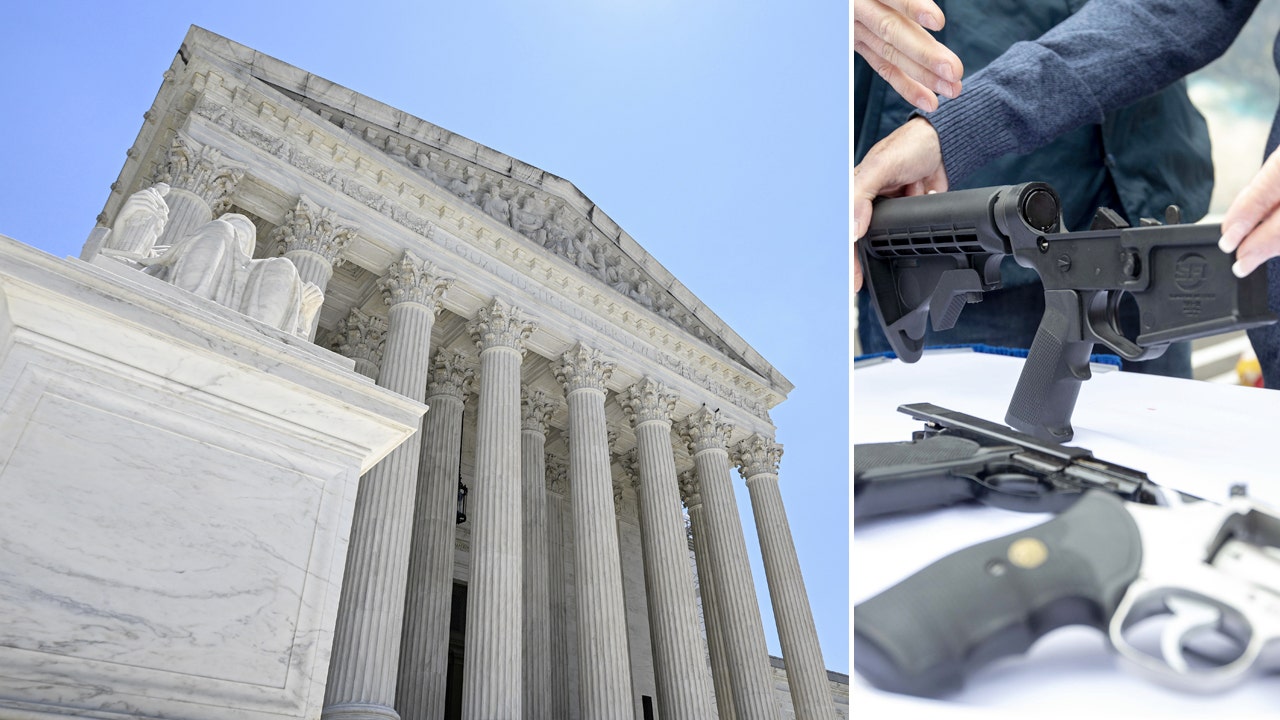
The U.S. Supreme Court made a monumental ruling on Thursday that a bump stock does not turn a firearm into an automatic weapon, invalidating a federal ban on bump stocks. In a 6-3 decision, Justice Clarence Thomas clarified that semiautomatic firearms, like those equipped with bump stocks, do not fall under the category of machine guns because they necessitate the shooter to reengage the trigger for each shot fired.
The case in question, Garland v. Cargill, posed the question of whether a bump stock qualifies as a machine gun as outlined by federal law by enabling a rifle to fire automatically more than one shot with a single trigger pull. The majority opinion concluded that a semiautomatic rifle with a bump stock does not meet the statutory definition of a machine gun since it cannot fire automatically with a single trigger function.
Following a tragic mass shooting in Las Vegas in 2017, the Bureau of Alcohol, Tobacco, Firearms, and Explosives (ATF) determined that bump stocks were machine guns, prompting swift efforts to outlaw them nationwide. Subsequently, the Trump administration initiated a ban on bump stocks and the Biden administration upheld it in court.
However, Justice Sonia Sotomayor, along with Justices Elena Kagan and Ketanji Brown Jackson, dissented, noting that the majority’s decision disregarded Congress’s definition of a machine gun and adopted a fundamentally different interpretation.
Notably, a bump stock is an attachment that enhances the firing capability of a semi-automatic weapon by harnessing recoil energy to enable rapid trigger reengagement. Michael Cargill, a gun store owner, challenged the government’s ban on bump stocks, arguing that the ATF lacked the authority to impose such a ban without congressional approval.
Following the Supreme Court’s ruling, Cargill’s lawyer, Mark Chenoweth, emphasized that the decision vindicated their stance against the ATF’s overreach in rewriting laws unilaterally. More than 500,000 bump stocks were confiscated under the now-overturned ban, prompting calls for legislative action by opponents of bump stocks.
President Biden expressed disappointment in the ruling, urging Congress to pass laws banning bump stocks and assault weapons to prevent further tragedies like the Las Vegas massacre. Bump stocks, along with other gun modifications, have been at the center of debates surrounding gun control measures in the United States.
Overall, the Supreme Court’s decision represents a significant development in the ongoing discourse on gun regulations and highlights the diverging perspectives on firearm accessories like bump stocks among various stakeholders and policymakers.