Top Jewish group worried that Harris as president would be ‘much worse’ due to increased antisemitism.
Vice President Kamala Harris’ recent actions regarding anti-Israel protests, her absence during Israeli Prime Minister Benjamin Netanyahu’s congressional address, and her sympathetic rhetoric towards Gaza have raised concerns among a GOP Jewish advocacy group. They claim that Harris will be a less favorable partner for Israel compared to President Joe Biden. The group criticized Harris for taking a day to issue a weak condemnation of the anti-Israel protests that included burning American flags and chanting antisemitic slogans without mentioning specific actions to hold the protesters accountable. Markstein, the head of this advocacy group, expressed his disappointment in Harris’ priorities and warned that more challenges may occur if she is elected.
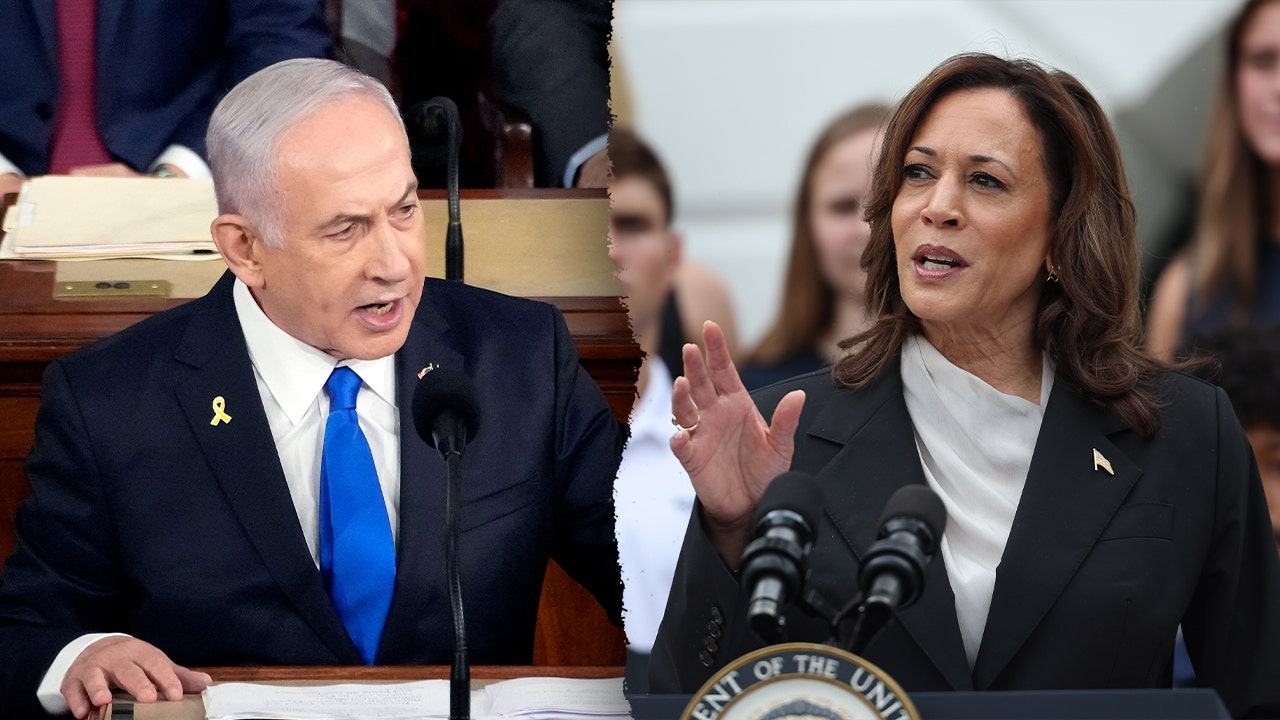
Netanyahu’s visit to the U.S. coincides with Harris’ campaign efforts to secure the Democratic nominee for president following Biden’s withdrawal from the race. Despite being invited to address lawmakers in a joint session of Congress, Harris did not greet Netanyahu upon his arrival. The Israeli prime minister delivered a speech detailing the country’s conflict with Hamas while Harris opted to attend a sorority event in Indiana instead.
Prior to Netanyahu’s speech, anti-Israel protests erupted in Washington D.C., where agitators burned the American flag, labeled the Israeli prime minister as a “war criminal,” and defaced a Liberty Bell replica with pro-Hamas messages. Harris later condemned the protests as unpatriotic and fueled by dangerous hate rhetoric. Markstein highlighted Harris’ handling of Netanyahu’s visit as a reflection of her potential administration’s stance on Israel.
The RJC, a conservative nonprofit organization based in Washington, D.C., emphasized the need for a shift in the U.S.-Israel relationship and expressed hopes for Donald J. Trump’s reelection to combat antisemitism. Harris has previously voiced support for Israel’s right to defend itself, alongside calls for a ceasefire in the region. Despite meeting with Benny Gantz, a rival of Netanyahu, and advocating for a ceasefire earlier in the year, Harris faced backlash for sympathizing with anti-Israel protesters and their emotional responses to Gaza.
As tensions escalate in the Middle East, Harris’ position on the Israeli-Palestinian conflict continues to be scrutinized. The Jewish community and conservative groups closely monitor her actions, fearing the potential implications of a future Harris administration on U.S.-Israel relations. Only time will tell how Harris navigates these complex issues and whether her policies align with the interests of key stakeholders in the region.