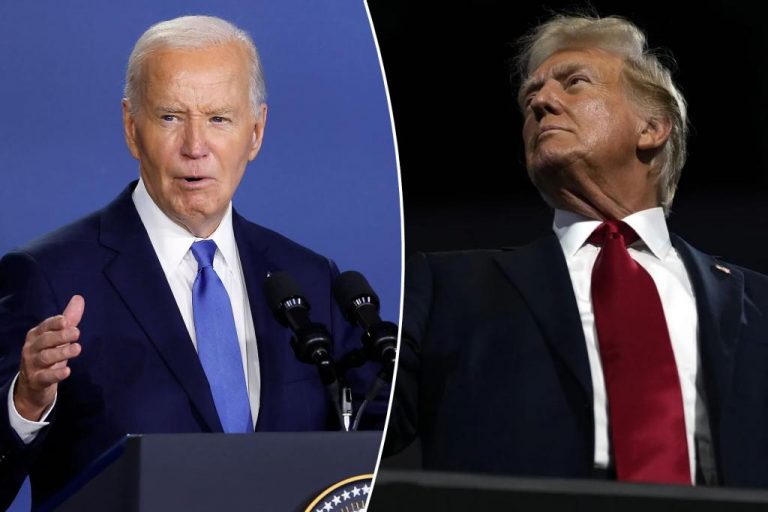
Trump and Harris hit campaign trail before election, with one showing signs of fear.
As the final stretch of the presidential campaign approaches, both President Donald Trump and Democratic nominee Kamala Harris are making their rounds to secure votes. However, the locations and strategies they are utilizing reveal a stark contrast in their campaign approaches.
President Trump has been focusing on the battleground states that secured his victory in 2016. States such as Michigan, Pennsylvania, and Wisconsin have seen multiple visits from the President, indicating his commitment to retaining these crucial states. His campaign strategy seems to be rallying his base and energizing supporters in these key areas.
On the other hand, Kamala Harris has been expanding her reach to traditionally red states such as Texas, Georgia, and Arizona. By dedicating time and resources to these states, Harris is demonstrating a more inclusive approach to her campaign. This strategy suggests that she is confident in her base and is now looking to make inroads into territories previously dominated by the Republican party.
The differing choices in campaign locations between Trump and Harris reflect a deeper sentiment about the current state of the race. While Trump appears to be doubling down on his 2016 strategy, Harris is aiming to broaden her appeal and challenge traditional political boundaries.
One possible explanation for Trump’s focus on battleground states is a sense of insecurity about his standing in these areas. Recent polls have shown a narrow margin between Trump and Biden in some of these states, prompting the President to shore up support in areas that may be slipping away from him. This defensive approach indicates that Trump is concerned about losing ground in territories that were previously reliable for him.
On the other hand, Harris’s decision to venture into traditionally red states like Texas and Georgia could be a sign of confidence in her campaign’s momentum. By investing time and resources in these areas, Harris is signaling that she sees an opportunity to make substantial gains in territories that have historically been challenging for Democrats. This offensive strategy suggests that Harris is not content with playing defense but is actively seeking to expand her support base.
Another factor to consider is the overall tone and message of the two campaigns. Trump’s rallies and speeches have often focused on divisive rhetoric and attacks on his opponents. His strategy appears to be stoking fear and anger among his base to drive turnout. In contrast, Harris’s campaign has centered on themes of unity, empathy, and inclusivity. By emphasizing these values, Harris is appealing to a broader audience and positioning herself as a unifying figure.
It is important to recognize the symbolism inherent in the campaign choices of both candidates. Trump’s insistence on visiting battleground states highlights his attachment to the tactics that brought him success in 2016. By contrast, Harris’s willingness to break into new territories signals a willingness to challenge the status quo and chart a different course for the Democratic party.
As the campaign enters its final days, the choices made by Trump and Harris in terms of campaign locations and strategies will play a crucial role in determining the outcome of the election. Whether Trump’s defensive stance or Harris’s offensive push will prove more effective remains to be seen, but one thing is clear – the final stretch of the race will be a test of character, strategy, and vision for both candidates.