Trump criticizes Harris for meeting with Netanyahu
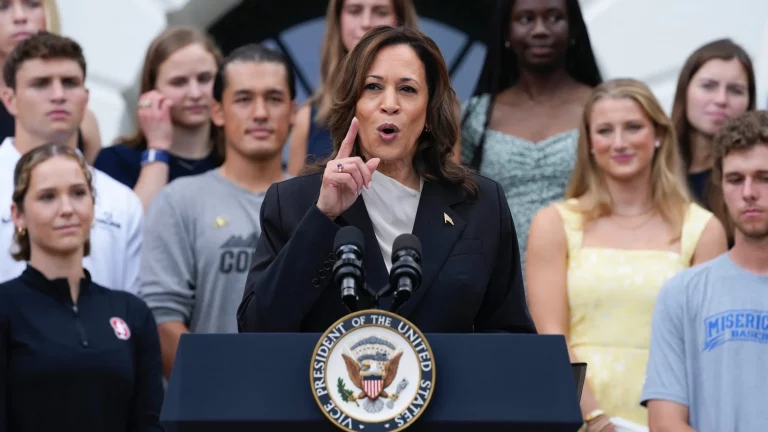
The recent visit of Israeli Prime Minister Benjamin Netanyahu to Washington, D.C. has stirred controversy and sparked reactions from former President Trump regarding Vice President Kamala Harris’ conduct during their meeting. Trump criticized the White House for what he perceived as disrespectful treatment towards Israel, a long-standing Middle East ally.
Netanyahu had meetings with both President Biden and Vice President Harris during his visit to the U.S. capital. Trump took to his social media platform, Truth Social, to express his dismay over the encounter, labeling it as “terrible and insulting.” He specifically noted Harris’ refusal to preside over Congress during Netanyahu’s speech, a customary duty of the Vice President.
Trump didn’t hold back in his criticism, stating that Harris’ handling of the meeting displayed incompetence that could potentially prolong the conflict and delay efforts for a hostage release. He drew parallels to the administration’s handling of the situation in Afghanistan, suggesting a pattern of gross incompetence that now extends to advising Israel on its conflict with Hamas.
In response to Harris’ mention of civilian casualties in Gaza and the dire humanitarian situation during their meeting, an Israeli official conveyed Netanyahu’s dissatisfaction to Axios. The exchange highlighted the sensitivities surrounding the Israeli-Palestinian conflict and how diplomatic interactions can impact perceptions.
Trump used the opportunity to reiterate his stance as a favorable candidate for specific demographic groups, appealing to Jewish and Catholic Americans. He urged these communities not to support Harris or any Democrat, emphasizing his candidacy as the preferable choice for the upcoming election.
The timeline of events further added to the contention, with Netanyahu’s meeting with Trump at Mar-a-Lago following the White House discussions. The proximity of these encounters underscored the complex dynamics of international relations and political alliances.
The interactions between U.S. officials and foreign leaders carry significant implications, shaping global perceptions and influencing diplomatic strategies. The nuances of diplomatic protocol and communication can determine the success or challenges faced in addressing international issues.
As the discourse continues surrounding the Israeli-Palestinian conflict and the role of the U.S. in promoting peace and stability in the region, each interaction and statement from officials garner heightened scrutiny and analysis. The intricacies of international diplomacy underscore the need for careful navigation and strategic decision-making in fostering relationships with allies and addressing complex geopolitical challenges.
In conclusion, the intersection of political rhetoric, international diplomacy, and personal dynamics can result in both constructive dialogues and contentious exchanges. The recent events involving Israeli Prime Minister Benjamin Netanyahu, Vice President Kamala Harris, and former President Trump exemplify the multifaceted nature of diplomatic engagements and the impact of individual actions on broader diplomatic relationships.