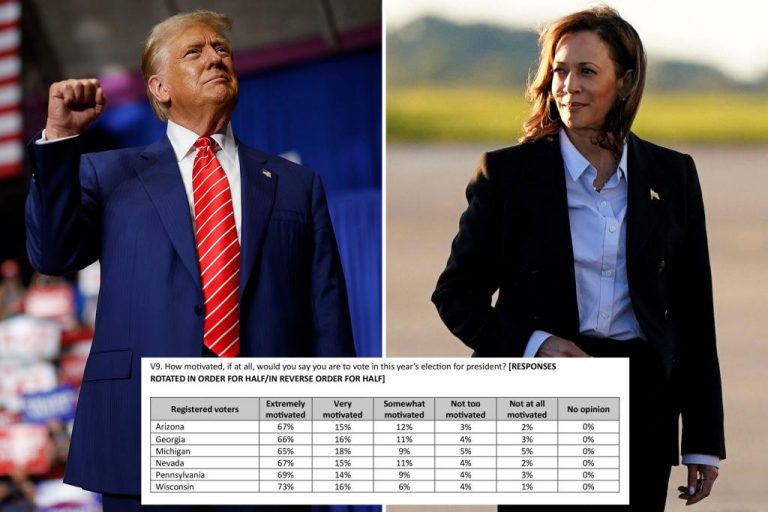
Trump criticizes Kamala Harris for causing problems in Detroit, and says he will revitalize the city.
President Trump recently took aim at Vice President Kamala Harris, accusing her of “wreaking havoc” on Detroit and promising a “stunning rebirth” of the city he described as “sacred”. In a fiery speech, Trump criticized Harris for her alleged mishandling of Detroit’s affairs and pledged to bring about positive change in the city.
During his speech, Trump highlighted the challenges faced by Detroit, including issues related to crime, poverty, and urban decay. He blamed Harris for exacerbating these problems and painted a grim picture of the city under her leadership. However, amidst the criticism, Trump also expressed hope for Detroit’s future, promising to oversee a transformation that would rejuvenate the city and restore its former glory.
Trump’s rhetoric struck a chord with his supporters, who cheered him on as he outlined his vision for Detroit. Many in the crowd were eager to see the city experience a revival and viewed Trump as the leader who could make it happen. His promises of a “stunning rebirth” resonated with those who longed to see Detroit thrive once again.
Despite facing backlash from detractors who questioned his motives and sincerity, Trump remained steadfast in his commitment to Detroit. He emphasized the importance of revitalizing the city and creating opportunities for its residents to prosper. Trump’s words served as a rallying cry for those who believed in his ability to effect change and bring about a new era of prosperity for Detroit.
As the controversy surrounding his remarks continued to grow, Trump doubled down on his pledge to help Detroit rise from its current state of disrepair. He outlined a series of initiatives aimed at addressing the city’s most pressing issues, including plans to boost economic development, improve infrastructure, and enhance public safety. Trump’s proposals sparked optimism among Detroiters who saw them as a step in the right direction.
In response to Trump’s comments, Vice President Harris defended her record in Detroit and highlighted the progress made during her tenure. She refuted Trump’s claims of “wreaking havoc” and dismissed his promises of a “stunning rebirth” as political rhetoric. Harris urged Detroit residents to focus on the positive changes that had taken place under her watch and cautioned against putting their faith in empty promises.
The ongoing feud between Trump and Harris underscored the deep divides in American politics and the stark differences in their approaches to governance. While Trump espoused a vision of bold and decisive action, Harris advocated for steady progress and incremental change. The clash between their competing visions for Detroit captured the attention of the nation and set the stage for a heated debate on the future direction of the city.
As the debate raged on, Detroit found itself at the center of a national conversation on urban renewal and economic revitalization. The city’s residents were torn between conflicting narratives presented by Trump and Harris, each vying for their support and allegiance. The outcome of this battle of ideas would shape Detroit’s destiny and determine its trajectory for years to come.
Amidst the political maneuvering and grand promises, the people of Detroit remained the true protagonists of this unfolding drama. Their resilience, determination, and spirit were the driving forces behind the city’s potential for renewal and rebirth. As Trump and Harris sparred over the fate of Detroit, it was ultimately up to its residents to chart a path forward and carve out a brighter future for themselves and their communities.
In the end, Trump’s pledge to deliver a “stunning rebirth” of Detroit may have been met with skepticism and doubt, but it also ignited a spark of hope and possibility in the hearts of many who longed to see their city flourish once again. Whether or not Trump’s vision comes to fruition remains to be seen, but one thing is certain – the people of Detroit will play a pivotal role in shaping their own destiny and determining the course of their city’s future.