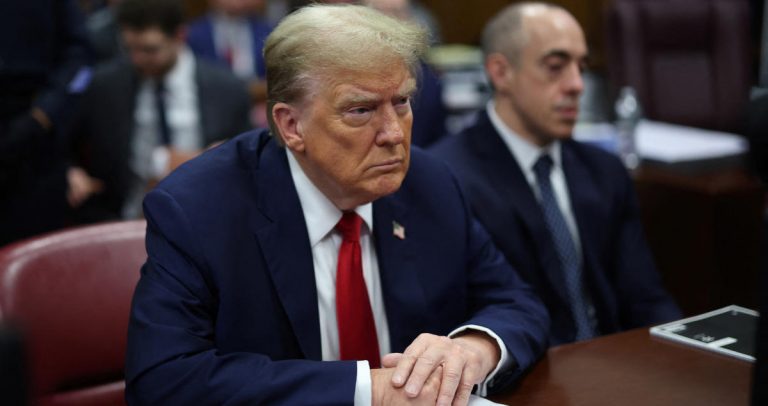
Trump promises to give harsher punishments to illegal migrant criminals.
President Donald Trump has recently declared his intention to implement stricter sentencing guidelines for individuals who cross the border illegally and engage in criminal activities. In his latest address to the nation, Trump emphasized the need to crack down on illegal migrant criminals and ensure the safety and security of American citizens.
Trump’s proposal for tougher sentences on illegal migrants who commit crimes has sparked both support and criticism from various sectors of society. While some applaud the president’s efforts to enhance border security and protect the country from potential threats, others raise concerns about the potential impact of such measures on migrant communities and the criminal justice system.
The debate over immigration and law enforcement policies has long been a contentious issue in the United States. With millions of undocumented migrants residing in the country, finding a balance between maintaining national security and upholding human rights remains a challenge for policymakers and law enforcement officials.
Under Trump’s new sentencing guidelines, illegal migrants convicted of criminal offenses would face more severe penalties, including longer prison terms and increased fines. The administration argues that these stringent measures are necessary to deter criminal activity and prevent repeat offenses among illegal migrant populations.
Critics of Trump’s proposal, however, raise concerns about the potential for discriminatory enforcement and the negative effects on migrant communities. They argue that imposing harsher sentences on undocumented individuals could exacerbate social inequalities and erode trust between law enforcement agencies and immigrant populations.
In response to these criticisms, the Trump administration has reiterated its commitment to enforcing existing immigration laws and protecting the country’s borders. Supporters of the president’s policies believe that strict enforcement measures are essential to maintaining law and order and preventing unauthorized immigration into the United States.
As the debate over immigration policy and border security continues to unfold, it is essential for policymakers, lawmakers, and citizens to engage in constructive dialogue and seek solutions that uphold the principles of justice, fairness, and compassion. Balancing the need for national security with respect for human rights is a complex and challenging task, but it is one that must be addressed with careful consideration and a commitment to upholding the values that define the United States as a nation.
Regardless of one’s stance on the issue of illegal migration and criminal sentencing, it is clear that the current debate reflects a broader conversation about the future of immigration policy in the United States. By examining the underlying factors driving migration, addressing root causes of criminal behavior, and promoting unity and understanding among diverse communities, policymakers can work towards creating a more just and equitable society for all individuals, regardless of their background or immigration status.
Ultimately, the success of any immigration policy lies in its ability to strike a balance between security and compassion, enforcement and tolerance, deterrence and rehabilitation. By approaching the issue of illegal migration and criminal sentencing with empathy, understanding, and a commitment to upholding the rule of law, the United States can move towards a more inclusive, safe, and prosperous future for all of its residents.