Trump talks about unity in speech, then changes his message.
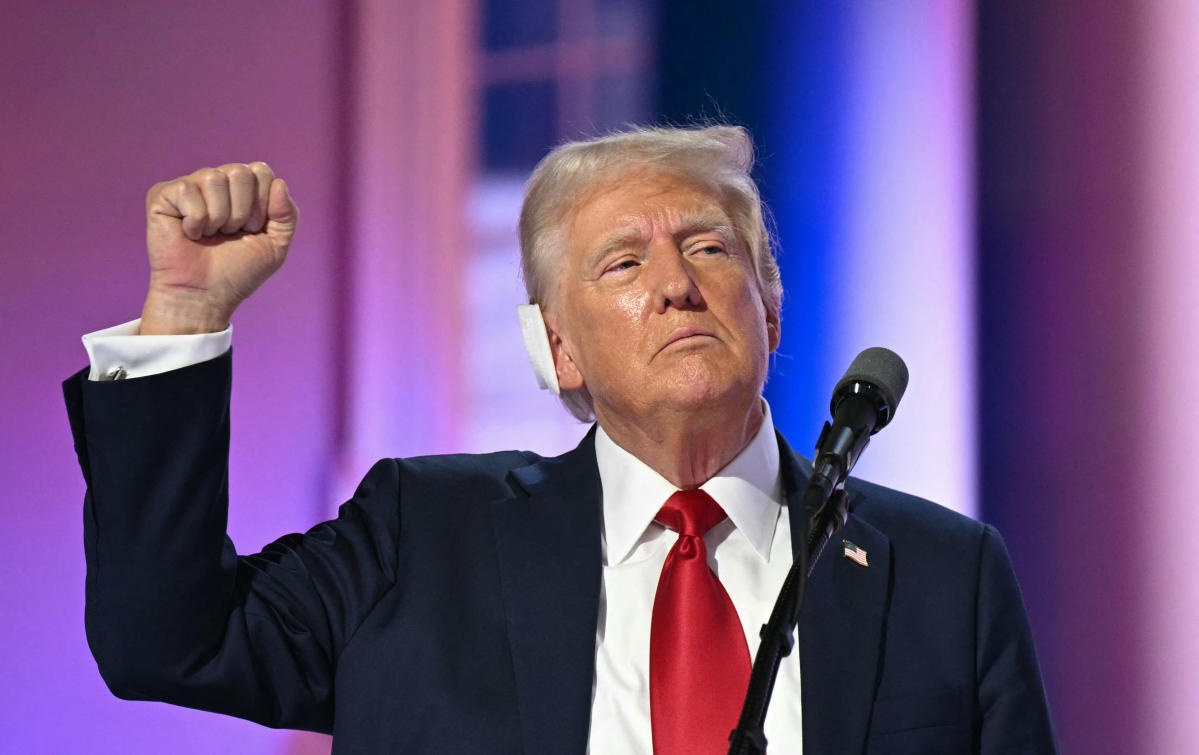
On the final night of the convention, amidst a wave of energy and enthusiasm, Donald Trump emerged with his ear bandaged and his voice somewhat subdued to accept his third consecutive Republican presidential nomination. In a poignant moment, Trump credited the grace of God for saving him from an assassination attempt, allowing him to continue his mission of saving America. Despite the chaos and bloodshed he witnessed, Trump expressed a sense of safety knowing that he had divine protection.
The big question looming over the event was whether Trump would strike a different tone from his previous appearances. He had initially prepared a scathing speech targeting the Biden administration, but instead chose to focus on uniting the country. Trump’s decision to refrain from mentioning Biden in his remarks signaled a potential shift in his messaging.
As Trump took the stage, recounting the harrowing experience of the assassination attempt, he appeared visibly moved. The crowd rallied behind him, affirming his rightful place on stage. Trump declared his intention to be a president for all Americans, emphasizing the need for unity in a divided nation.
However, Trump’s speech soon deviated from the scripted narrative as he delved into familiar attacks on Democrats, diverting attention from his message of unity. Despite promising not to mention Biden, Trump eventually launched a scathing critique of his opponent, underscoring their political rivalry.
Trump’s strategy to unify America revolves around urging his opponents to end their partisan attacks. He has long portrayed himself as a victim of various forces working against him, a narrative that has resonated with a segment of the population. Even as Trump faced adversity, his supporters rallied to his defense, praising his resilience.
Trump’s recent string of favorable outcomes, both personally and politically, has potentially shifted the dynamics of the upcoming election. However, the deeply entrenched polarization in America and Trump’s strained relationships with a significant portion of the population remain critical factors.
During his speech, Trump received endorsements from celebrity figures like Hulk Hogan and Kid Rock, signaling a return to a more retro and larger-than-life approach to campaigning. The absence of prominent Trump women like Ivanka and Melania throughout the week was notable, but they made a grand entrance just in time for Trump’s address, garnering enthusiastic applause.
The theme of the convention centered around “Make America Great Once Again,” with a underlying focus on presenting Trump as a compassionate and empathetic figure. Several speakers shared personal anecdotes highlighting Trump’s compassionate side, seeking to humanize the former president.
Despite the efforts to rebrand Trump as a unifying force, his speech ultimately reverted to familiar attacks and divisive rhetoric. The challenge of uniting a deeply divided country remains a formidable task for Trump as he navigates the upcoming election.
The convention featured a lineup of notable speakers, including Sen. Steve Daines, Mike Pompeo, and Hulk Hogan, each offering their perspectives on Trump’s candidacy and the future of the Republican Party. As the election approaches, the political landscape continues to evolve, presenting new challenges and opportunities for all candidates involved.
Overall, Trump’s speech marked a pivotal moment in his campaign, showcasing his ability to connect with voters while also highlighting the enduring divisions within American society. As the election draws near, the outcome remains uncertain, with Trump’s ability to unite the country hanging in the balance.