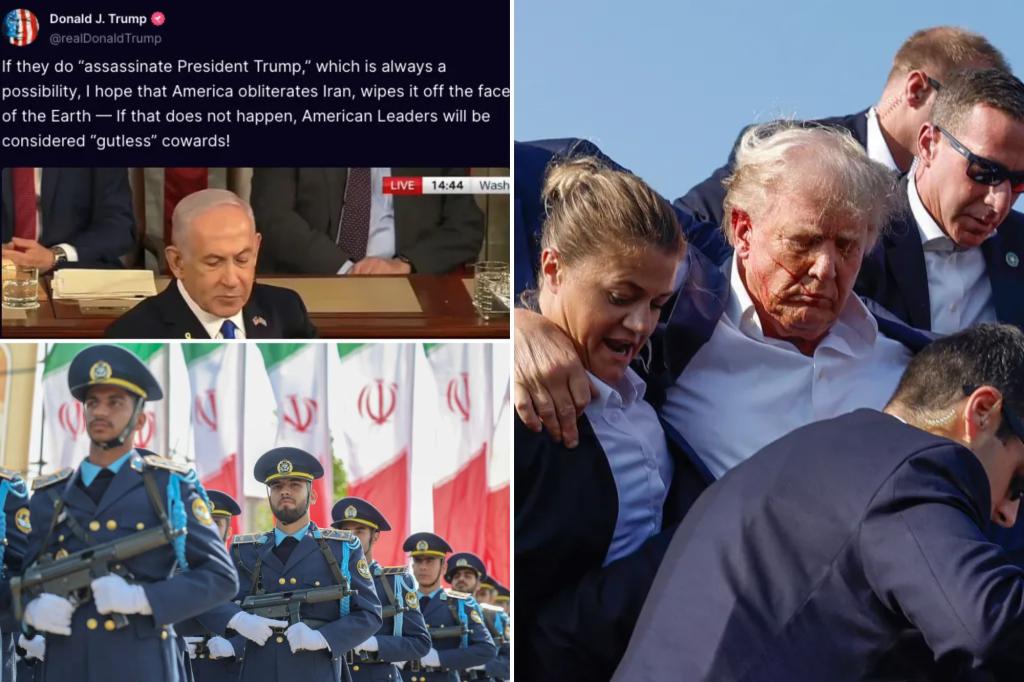
Trump wants US to destroy Iran if they kill him.
President Donald Trump recently made a shocking statement during a press conference, stating that he hopes the United States “obliterates Iran” if he were to be assassinated by the American adversary. This declaration has sparked widespread controversy and debate among politicians, experts, and the general public.
Trump’s remarks came in response to a question about the escalating tensions between the US and Iran. The President expressed his belief that Iran poses a threat to national security and should be dealt with decisively. However, his suggestion of total annihilation in the event of his assassination has raised alarm bells among many.
Political analysts have criticized Trump’s statement, calling it reckless and inflammatory. They argue that such rhetoric only serves to escalate hostilities and could lead to catastrophic consequences. Diplomatic efforts to ease tensions with Iran have been ongoing, and it is feared that Trump’s aggressive stance could derail these delicate negotiations.
On the other hand, supporters of the President have defended his position, citing Iran’s history of aggression and support for terrorist organizations. They believe that a strong response is necessary to deter any potential attacks on American interests. Trump’s uncompromising stance is seen as a show of strength and resolve in the face of external threats.
The international community has also weighed in on the issue, with many world leaders expressing concern over the possibility of a military conflict between the US and Iran. The United Nations has called for restraint and dialogue to resolve differences peacefully, urging both sides to prioritize diplomacy over aggression.
In light of these developments, it is clear that the situation between the US and Iran is at a critical juncture. The stakes are high, and the potential for miscalculation is significant. It is crucial for all parties involved to exercise caution and pursue avenues for de-escalation to prevent further escalation of tensions.
As the world watches and waits to see how events unfold, one thing is certain – the need for cool heads and rational decision-making has never been more important. The future of US-Iran relations hangs in the balance, and the choices made in the coming days and weeks will have far-reaching implications for regional stability and global security.
Ultimately, the hope is that cooler heads will prevail, and a peaceful resolution to the current crisis can be achieved. The road ahead may be fraught with challenges, but with diplomacy, restraint, and a commitment to dialogue, there is still hope for a peaceful and mutually beneficial outcome for all parties involved.