Trump wins swing-state poll, but doesn’t help other Republicans
Trump’s latest triumph in a recent swing-state poll has sparked new debate and analysis across the political landscape. While the results show that President Trump has gained ground against his opponent, Senator Kamala Harris, the implications for the Republican party downballot remain uncertain.
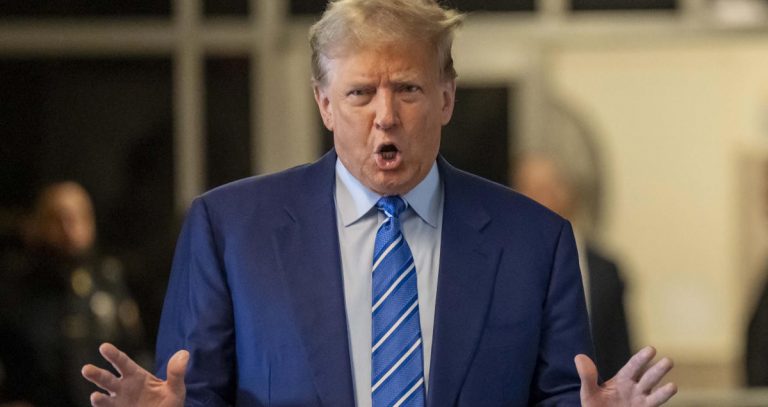
The poll, which surveyed voters in key swing states, revealed that Trump’s approval rating has seen a significant increase in recent weeks. This surge in popularity has put him ahead of Senator Harris in terms of public approval, a development that has energized his supporters and confounded his critics.
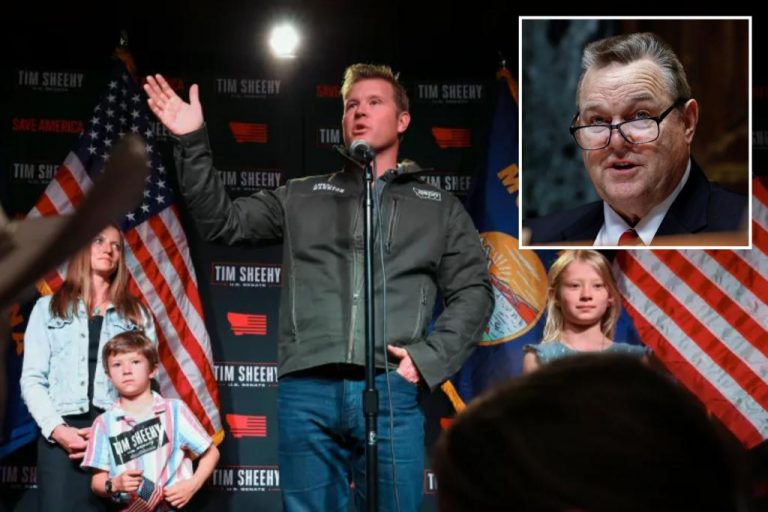
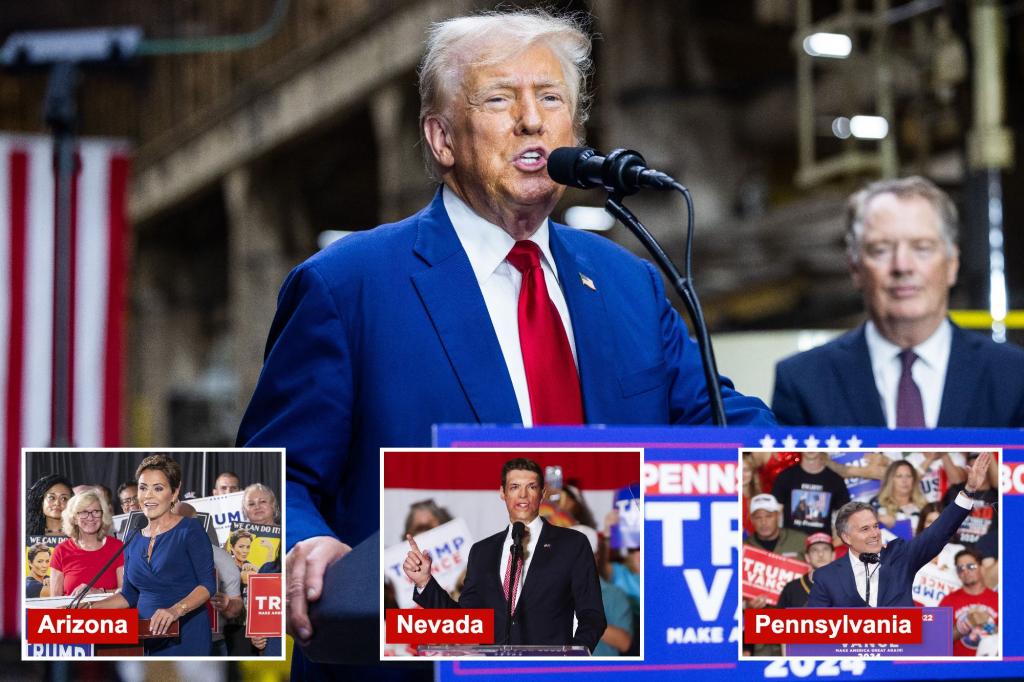
However, despite Trump’s personal success in the poll, the data also indicate a troubling trend for Republicans further down the ballot. Many GOP candidates are struggling in their respective races, with some even facing the possibility of defeat in traditionally conservative districts.
Political analysts have attributed this disconnect between Trump’s personal popularity and the Republican party’s overall performance to a variety of factors. Some point to the President’s unique persona and ability to energize his base, suggesting that his appeal does not necessarily translate to support for other GOP candidates.
Others argue that the current political climate, marked by deep divisions and heightened polarization, has created challenges for Republicans seeking to maintain control of key seats in Congress and state legislatures.
Despite these challenges, many Republicans remain optimistic about their prospects in the upcoming election. They point to a number of key policy issues, including the economy and national security, as areas where they believe the party can make significant gains.
At the same time, Democrats are working tirelessly to capitalize on Trump’s vulnerabilities and expand their own base of support. Senator Harris, in particular, has emerged as a dynamic and influential figure within the party, drawing enthusiastic crowds and energizing voters with her passionate advocacy for social justice and progressive values.
As the election draws nearer, both parties are ramping up their efforts to reach undecided voters and maximize turnout among their respective bases. Campaign ads flood the airwaves, candidates crisscross the country, and volunteers work tirelessly to register new voters and get out the vote.
In the midst of this whirlwind of activity, the swing-state poll serves as a valuable barometer of public sentiment and a crucial tool for understanding the dynamics of the race. While the results may shift and evolve in the coming weeks, one thing remains clear: the stakes could not be higher for both parties as they vie for control of Congress and the future direction of the nation.
Will Trump’s personal appeal be enough to carry Republicans to victory in November, or will Democrats capitalize on his weaknesses and push their agenda forward? Only time will tell, but one thing is certain: the battle for the soul of America is far from over.