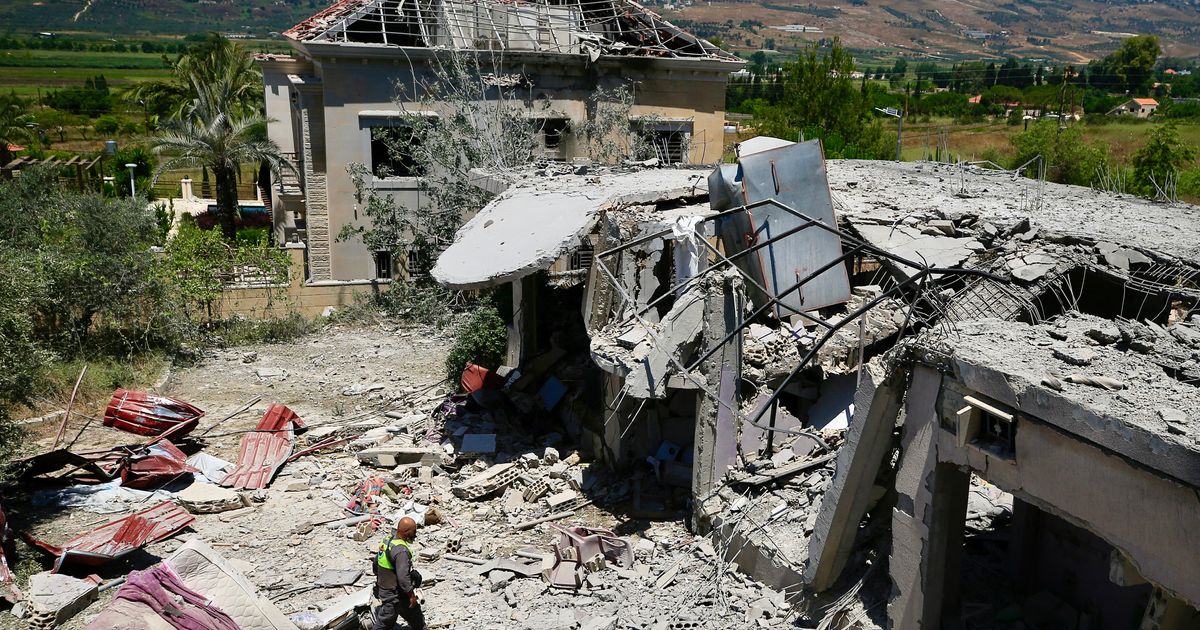
Washington prepares for more violence in Lebanon.
Israel’s military recently approved a plan to invade Lebanon to combat Hezbollah, the dominant militia in the region. This decision comes in the midst of escalating tensions and threats between the two sides, with over 150,000 people displaced from their homes along the Israeli-Lebanese border in the past nine months due to Hezbollah rockets and Israeli airstrikes.
The situation has taken a toll on both Lebanese and Israeli civilians, resulting in nearly 100 Lebanese and 10 Israeli civilian deaths. The conflict has extended beyond the border areas, affecting cities like Beirut and rendering southern Lebanon “uninhabitable.” In response, the US, Israel’s strongest ally, has shown support for Israel’s offensive actions.
Efforts are being made to prevent an all-out war in Lebanon, with Defense Secretary Lloyd Austin and Israeli counterpart Yoav Gallant expressing hope for diplomatic solutions to avoid catastrophic consequences. The primary issue at hand is Hezbollah’s presence in southern Lebanon, which Israel sees as a significant threat following previous attacks by Hezbollah’s ally Hamas in Gaza.
The US and Israel are working towards a deal that could lead to a ceasefire, halting hostilities between the two sides. Despite claims of seeking peaceful resolutions, the risk of a full-scale war between Israel and Hezbollah remains high, with many expressing doubt about President Joe Biden’s ability to prevent it.
The US’s unwavering support for Israel has raised concerns about its role in the conflict and the potential for escalating tensions in the region. Analysts believe that Israel is more likely to initiate a war, while Hezbollah has shown restraint in its attacks. However, the situation remains volatile, with the possibility of a broader conflict drawing in other countries like Iran, which supports Hezbollah.
As tensions rise, the Biden administration faces criticism for its handling of the situation, with concerns about the implications of arming Israel further. The administration is being urged to pressure Israel to avoid a larger campaign in Lebanon, which could have devastating consequences for the region.
Despite diplomatic efforts, the situation remains precarious, with fears of a potential war looming. The US government is making contingency plans for evacuating citizens from Lebanon, highlighting the seriousness of the situation and the need for a peaceful resolution to avoid further escalation.
As the conflict continues to unfold, the Biden administration faces challenges in mediating between the parties involved and preventing a full-scale war. The region’s stability hangs in the balance, with the need for swift and effective diplomatic action to avert a humanitarian crisis.
In conclusion, the situation in Lebanon is critical, with the risk of war ever-present. It is crucial for all parties involved to prioritize diplomacy and seek peaceful solutions to prevent further bloodshed and suffering for the people of Lebanon and Israel.