White House and family disagree on whether Biden’s health affected his decision to drop out.
Days before formally withdrawing from the 2024 race, President Biden revealed in a media interview that a medical diagnosis could potentially sway him to reconsider running for a second term.
During a BET interview earlier this month, Biden stated, “If I had some medical condition that emerged…If doctors came to me and said, ‘You got this problem, that problem.’”
Despite weeks of assurance from Biden and his campaign that he would continue in the race, the president announced his withdrawal on Sunday afternoon and promptly endorsed Vice President Kamala Harris for the presidency.
In a post on X Sunday afternoon, Biden declared, “My fellow Democrats, I have decided not to accept the nomination and to focus all my energies on my duties as President for the remainder of my term.” He then voiced his full support for Harris and urged Democrats to unite against Trump.
Biden, currently self-isolating in Rehoboth Beach, Delaware, following a COVID-19 diagnosis, indicated that he would provide more details about his decision to withdraw “later this week.”
“Our president, Joe Biden wanted to be here today. He is feeling much better and recovering fast, and he looks forward to getting back on the road,” Harris mentioned in her first public address since Biden’s exit from the race.
White House physician Dr. Kevin O’Connor issued an update on Monday afternoon stating that Biden’s symptoms have nearly completely resolved, and he is carrying out all his presidential responsibilities.
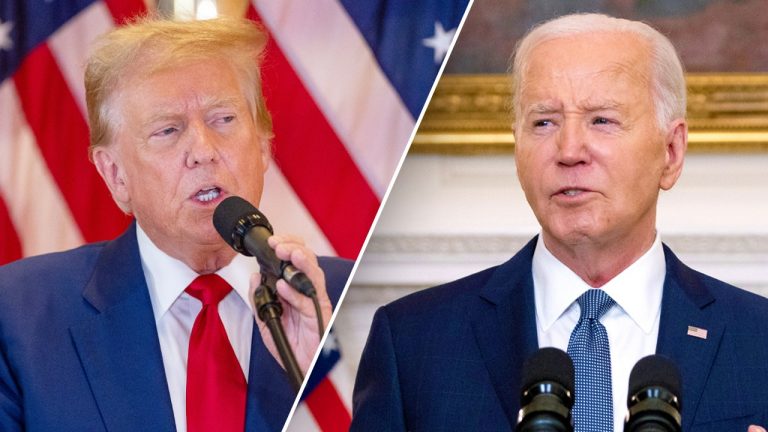
Conservatives, including former White House doctor Ronny Jackson, have raised concerns about Biden’s health over the years, particularly following his lackluster debate performance against former President Trump last month.
Biden and his administration have countered these concerns by asserting that his mental fitness is intact and that he does not suffer from dementia, Parkinson’s, or other illnesses.
However, Biden’s brother Frank Biden acknowledged that the president’s health played a role in his decision not to seek re-election, emphasizing that defeating Trump and continuing Biden’s work remain top priorities.
Deputy press secretary Andrew Bates dismissed any suggestion that health was a factor in Biden’s withdrawal from the race.
Biden’s mental acuity has come into question since the 2020 election, with concerns escalating after a report highlighted his poor memory regarding classified documents from his time as vice president.
Further doubt was cast on Biden’s mental sharpness when a Wall Street Journal article earlier this year portrayed him as losing his mental acuity and showing his age during meetings.
In addition to mental acuity concerns, Biden has a history of health issues, including surviving two brain aneurysms in 1988 that nearly proved fatal.
President Biden has faced criticism and mockery on social media for various gaffes and incidents that have raised doubts about his mental fitness and robustness, including being led offstage by former President Obama at a fundraiser.
Following his faltering debate performance in June, calls from both Democratic officials and allies urged Biden to step down from the race due to concerns about his ability to defeat Trump.
Despite the mounting pressure, Biden and his campaign repeatedly affirmed his commitment to the race and rebutted claims about his slipping mental fitness.
With Biden now out of the race, Vice President Kamala Harris appears poised to step in as his replacement, garnering endorsements from prominent Democrats like former President Clinton and Hillary Clinton.
Former President Trump responded to Biden’s exit by criticizing him as the “worst president” and insinuating that Harris would be an easier opponent to defeat.
The Democratic Party will soon nominate its candidate for president as the political landscape continues to evolve.