Why did Trump pick JD Vance?
Ohio Senator JD Vance proudly accepted his party’s nomination for vice president at the Republican National Convention, marking a significant moment in his political career. In his impassioned speech, Vance emphasized the unity of Republicans and their shared love for the country, setting the stage for a fierce battle in the upcoming election.
Vance’s journey to the national stage began with the release of his memoir, “Hillbilly Elegy,” which detailed his remarkable rise from poverty in the American Rust Belt to serving in the Marines and attending Yale Law School. Initially critical of then-candidate Trump, he eventually became one of the former president’s most ardent supporters, aligning himself closely with Trump’s conservative views on key issues.
As a strong advocate of the MAGA approach to politics, Vance’s selection as Trump’s running mate signifies a shift in the Republican Party towards a more unified vision. Unlike Trump’s previous choice of Vice President Pence, seen as a conservative counterbalance, Vance represents a direct alignment with Trump’s beliefs and aims to connect with Rust Belt voters crucial to securing another victory.
The decision to choose Vance as the vice presidential candidate represents a departure from traditional logic, as Vance’s similarities to Trump, both demographically and ideologically, have raised questions. However, his blue-collar background and youth may appeal to a wider range of voters, offering a fresh perspective in a field dominated by older candidates.
While the impact of vice presidential candidates on election outcomes is often minimal, Vance’s selection as the first millennial VP candidate underscores Trump’s commitment to solidifying the MAGA movement’s influence within the Republican Party for years to come. With endorsements from key figures within the party, Vance is positioned as a leader who embodies Trump’s vision for the nation’s future.
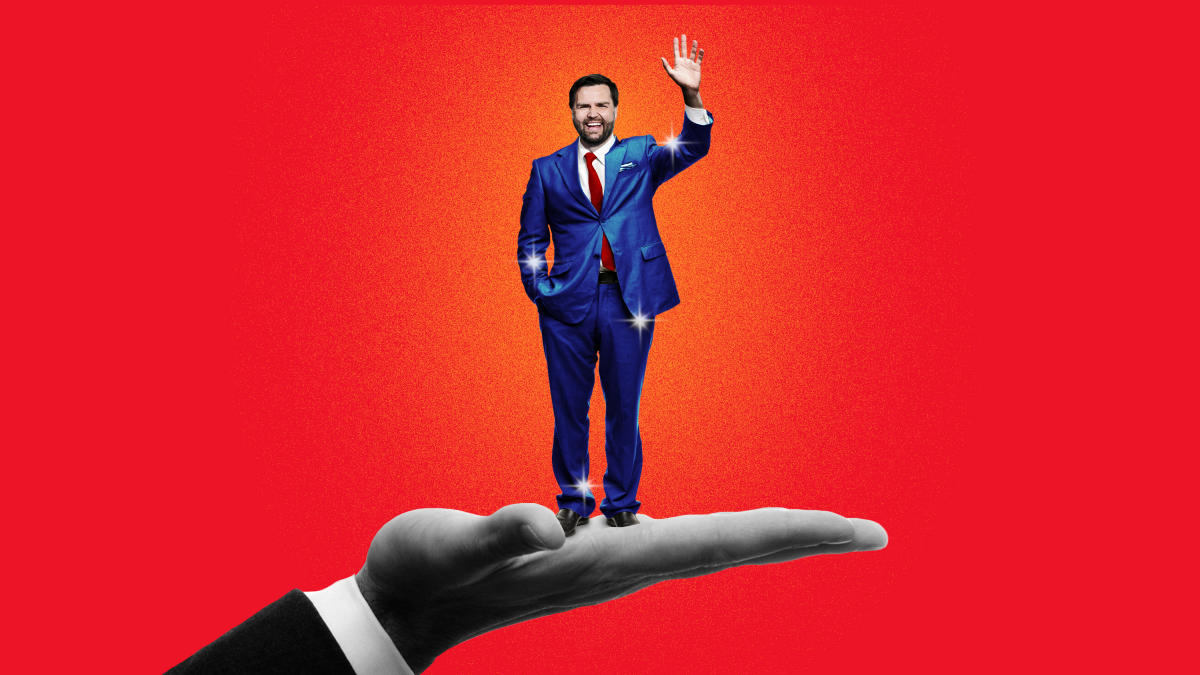
Trump’s choice of Vance as his running mate is seen as a strategic move to ensure unwavering loyalty, in contrast to perceived hesitations from Pence. Democrats, however, view Vance as a mere puppet for Trump’s extreme agenda, raising concerns about his commitment to upholding democratic principles.
Looking ahead, both Vance and Vice President Harris have expressed eagerness to engage in debates, setting the stage for intense political showdowns in the near future. As the campaigns continue to unfold, the contrast between Vance’s steadfast allegiance to Trump and his potential to shape the election’s outcome remains a topic of debate among political analysts.
In a divisive political landscape, opinions on Vance’s candidacy vary widely. Some view him as a malleable figure who will echo Trump’s messaging to gain favor, while others see him as a promising representative of the evolving Republican Party, capable of carrying the torch of the MAGA movement into the future. As the race heats up, Vance’s role as the Republican vice presidential candidate will undoubtedly shape the course of the election and the party’s trajectory in the years to come.